
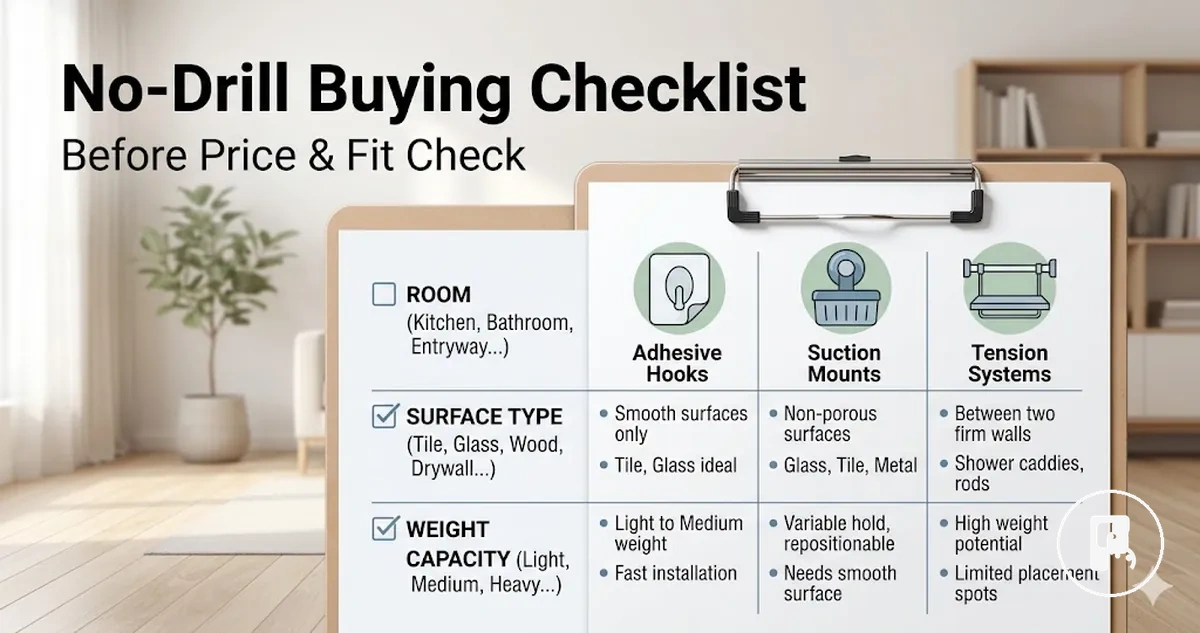
No-Drill Home Accessories Buying Checklist
No-drill home accessories refer to drill-free mounting solutions such as adhesive, suction, tension, or clip-on items used to organize or support everyday household needs. A buying checklist helps evaluate whether a chosen accessory set or bundle is suitable before moving into any price comparison, ensuring selection criteria are checked first rather than relying on appearance or listings.
In real use, especially in renter homes or temporary setups, decisions around no-drill home accessories depend on how the mounting method interacts with surface compatibility, how much holding strength is required for daily use, and whether the item must remain removable without creating unwanted residue or marks. The usefulness of an accessory set or bundle also depends on whether its components match the actual room function rather than including unused pieces that do not support the intended setup.
This buying checklist helps structure decision-making by filtering fit, safety, and practical usefulness before any price comparison is considered. It supports confirming whether the mounting method aligns with surface conditions and whether expected usage stays within safe and removable limits, establishing a clear readiness point before evaluating options further.
No-Drill Home Accessory Scope Check
No-drill home accessory is a category of wall-use items designed to attach without drilling into the wall, typically using adhesive, suction, tension, or clip-on mechanisms. These options are considered removable and are used in setups where surface protection and temporary installation are important. The scope is limited to accessories that attach without drilling and interact directly with a wall or surface under the buying checklist context.
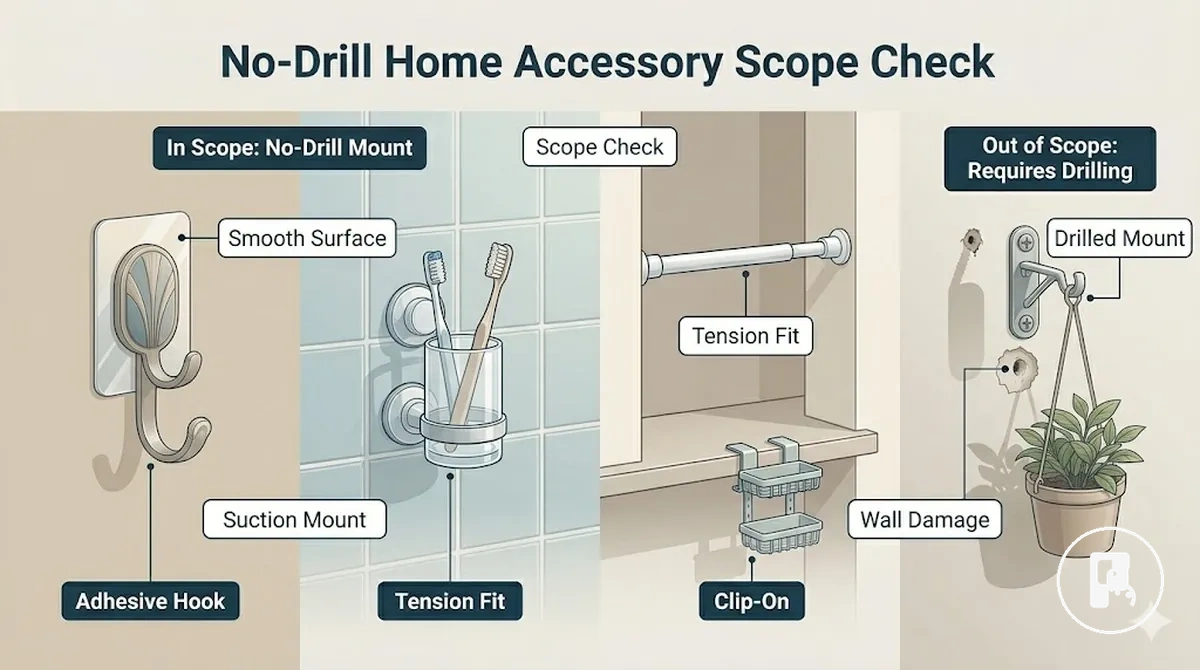
A Scope Check clarifies what belongs inside the category of No-Drill Home Accessory Scope Check before any buying checklist or price comparison is considered. These accessories include removable wall-mounted solutions that rely on adhesive pads, suction grip, tension pressure, or clip-on attachment systems. The purpose is to separate in-scope items from unrelated drill tools or general home decor so selection process stays focused. The scope connects directly to no-drill home accessories used in the buying checklist framework.
- Includes adhesive-based wall attachments that depend on surface contact
- Includes suction systems that rely on smooth, non-porous surfaces
- Includes tension-based setups that use pressure between fixed points
- Includes clip-on mechanisms that attach to existing structures or edges
- Excludes drill-based installations and permanent fixtures
Removability does not automatically mean suitability for every wall or condition. A no-drill home accessory may still be unsuitable when surface texture, load expectation, or room environment creates mismatch with the mounting method. This means selection must still depend on surface and usage constraints rather than assuming universal compatibility.
Room Use and Accessory Function
A bathroom, kitchen, entryway, bedroom, or utility space changes how a no-drill accessory behaves in daily use. Moisture, heat, repeated contact, and movement pressure all affect performance expectations. This makes room use the first selection filter for a no-drill home accessory before any feature comparison.
Room Use and Accessory Function determines how a no-drill home accessory should be matched to a specific room task before judging materials or price. Bathroom storage typically deals with moisture exposure and light-to-medium weight needs, while kitchen organization often involves heat proximity and frequent cleaning. Entryway holding requires repeated pulling force from daily movement, and bedroom placement usually prioritizes stable, low-interaction use. Utility use combines mixed conditions, where function must align with environmental variability, so room use directly shapes risk level for each accessory function.
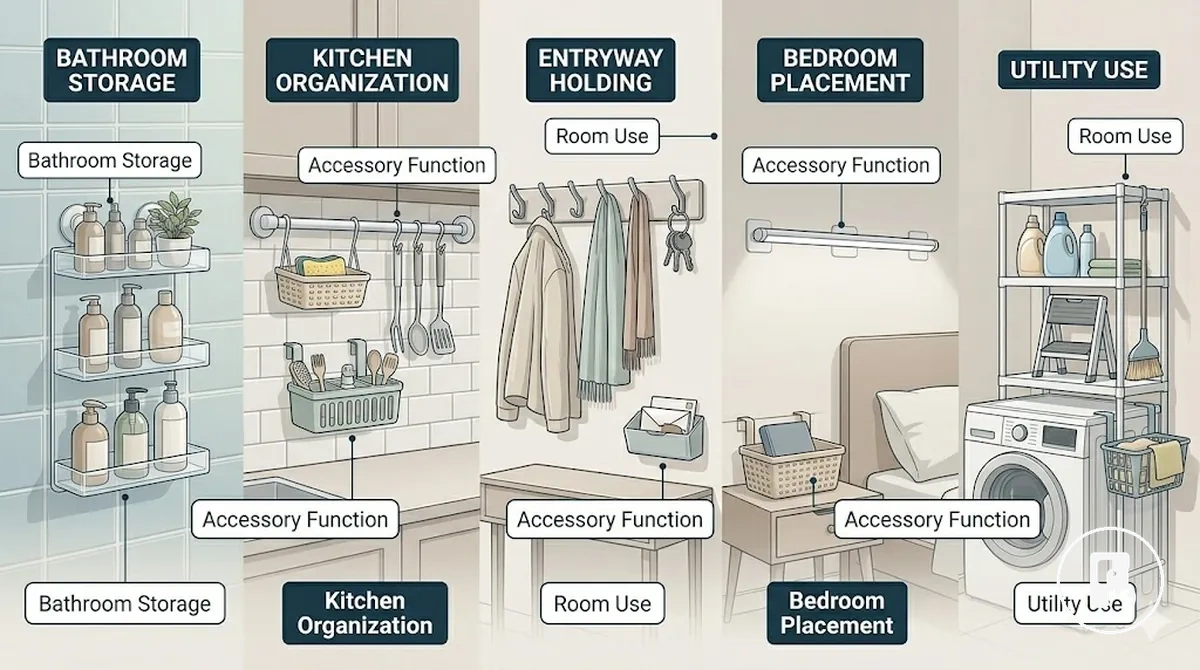
Different usage scenarios change how accessories are evaluated before product selection begins. A set of multiple items may distribute load across spaces, while a single accessory often needs stricter matching with its room task. Renters or temporary-home setups may prioritize flexible placement, but the function still needs to align with room conditions to avoid mismatches.
Room-task mini-checklist:
- Bathroom storage + moisture + adhesive or suction choice impact
- Kitchen organization + heat exposure + cleaning frequency considerations
- Entryway holding + repeated pull force + mounting stability needs
- Bedroom placement + low disturbance use + lighter load suitability
- Utility use + mixed conditions + variable surface compatibility
- Set vs single accessory + distribution of load and function
Hooks, Shelves, Caddies, Holders, and Organizers
Hooks, shelves, caddies, holders, and organizers define how a no-drill accessory is checked within the room-use context. Each type shifts expected load, contact area, moisture exposure, and removal sensitivity. This means the accessory type adjusts the checklist conditions rather than changing the overall selection scope.
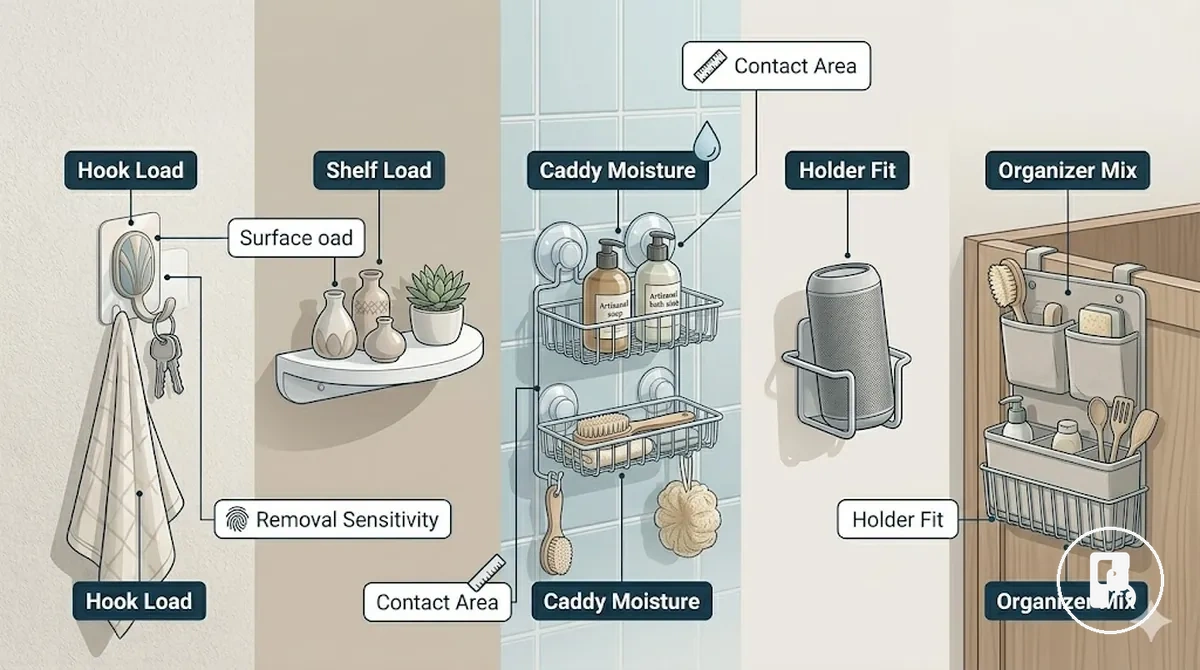
Hooks concentrate expected load on a small contact area and typically respond to pull force from hanging items. Shelves spread load across a wider contact area and usually require more stable surface contact. Caddies often relate to moisture exposure conditions in bathroom storage use, while holders vary based on object size and removal sensitivity. Organizers combine multiple storage functions, which increases variation in how load and contact area interact across use cases.
Accessory-type mini-checklist:
- Hook + expected load + pull force + minimal contact area
- Shelf + expected load + larger contact area + stability requirement
- Caddy + moisture exposure + bathroom storage use + surface sensitivity
- Holder + object size fit + retention need + removal sensitivity
- Organizer + combined storage function + load distribution + multi-use structure
Mounting Method Fit
Mounting method fit depends on surface, load, and removability expectations, because each no-drill option behaves differently under real use conditions. Adhesive, suction, tension, and clip-on approaches all respond to different constraints in a setup. This makes mounting method a direct fit decision rather than a preference choice.
In real scenarios, adhesive mounts often align with smooth painted walls or flat surfaces, while suction tends to rely on non-porous areas like tile or glass. Tension-based systems usually depend on frame pressure between two fixed points, and clip-on options require a stable attachment structure. Each mounting method must match both surface compatibility and expected load to avoid early failure or unwanted detachment.
| Mounting method | Best-fit condition | Watch-out condition | Checklist decision |
|---|---|---|---|
| Adhesive | Smooth, clean wall surfaces | Paint sensitivity or residue risk | Check surface compatibility and removability |
| Suction | Glass or tile with flat finish | Air gaps or moisture variation | Check surface seal stability |
| Tension | Two fixed opposing surfaces | Uneven pressure points or weak framing | Check load balance and frame strength |
| Clip-on | Existing ledges or attachment points | Mismatch with accessory structure | Check attachment fit and stability |
Myth-based selection often assumes one mounting method is universally reliable across all surfaces and loads. In practice, performance changes when surface conditions, weight distribution, or removal expectations differ. This makes method selection a conditional fit rather than a fixed rule.
Mounting method fit must always align with surface, load, and removability to avoid mismatch between intention and outcome. The comparison context for these choices can be expanded through compare mounting methods.
Adhesive, Suction, Tension, and Clip-On Mounts
Adhesive, suction, tension, and clip-on mounts define different trade-offs in hold, surface dependency, pressure fit, and attachment point behavior under the parent fit check. Each mount type solves a different fit problem depending on how the surface and structure interact. The table below compares these trade-offs in a compact format.
| Mount type | Local strength | Local limit | Best-fit cue |
|---|---|---|---|
| Adhesive | Stable hold when surface is clean and smooth | Surface dependency; may vary with residue or uneven finishes | Flat, dry, non-porous surfaces |
| Suction | Hold depends on air seal and smooth contact | High surface dependency; reduced stability on textured or wet areas | Glass or tile with smooth finish |
| Tension | Pressure fit between fixed points creates stability | Requires correct spacing and structural support | Frames or opposing surfaces |
| Clip-On | Secure attachment at defined points or edges | Depends on attachment point compatibility and edge shape | Rails or structured edges |
Mounting Method Fit
Mounting method fit depends on surface, load, and removability expectations, because each no-drill option behaves differently under real use conditions. Adhesive, suction, tension, and clip-on approaches all respond to different constraints in a setup. This makes mounting method a direct fit decision rather than a preference choice.
In real scenarios, adhesive mounts often align with smooth painted walls or flat surfaces, while suction tends to rely on non-porous areas like tile or glass. Tension-based systems usually depend on frame pressure between two fixed points, and clip-on options require a stable attachment structure. Each mounting method must match both surface compatibility and expected load to avoid early failure or unwanted detachment.
| Mounting method | Best-fit condition | Watch-out condition | Checklist decision |
|---|---|---|---|
| Adhesive | Smooth, clean wall surfaces | Paint sensitivity or residue risk | Check surface compatibility and removability |
| Suction | Glass or tile with flat finish | Air gaps or moisture variation | Check surface seal stability |
| Tension | Two fixed opposing surfaces | Uneven pressure points or weak framing | Check load balance and frame strength |
| Clip-on | Existing ledges or attachment points | Mismatch with accessory structure | Check attachment fit and stability |
Myth-based selection often assumes one mounting method is universally reliable across all surfaces and loads. In practice, performance changes when surface conditions, weight distribution, or removal expectations differ. This makes method selection a conditional fit rather than a fixed rule.
Mounting method fit must always align with surface, load, and removability to avoid mismatch between intention and outcome. The comparison context for these choices can be expanded through compare mounting methods.
Smooth Tile, Glass, Painted Walls, and Wet Areas
Smooth tile, glass, painted walls, textured walls, humid bathrooms, and splash zones each affect suitability, surface dependency, and rejection cue behavior. Adhesive, suction, tension, and clip-on mounts respond differently depending on moisture exposure and surface stability. The table below separates these surface conditions for clearer fit evaluation.
| Surface or environment | Suitability cue | Risk cue | Checklist action |
|---|---|---|---|
| Smooth tile | Generally suitable for suction or adhesive when clean and even | Grout lines or uneven tile edges may reduce stability | Check surface uniformity and smooth tile contact |
| Glass | High suitability for suction due to low surface friction | Cleaning residue or moisture can reduce hold | Verify glass surface is clean and dry |
| Painted walls | Conditionally suitable for adhesive depending on paint quality | Old or weak paint may lift or damage under load | Check paint stability and adhesion tolerance |
| Textured walls | Low suitability for most adhesive or suction mounts | Uneven surface reduces contact area and hold | Consider rejection cue for standard mounts |
| Humid bathrooms | Conditional suitability depending on moisture exposure level | Humidity may weaken adhesive and suction performance | Assess moisture exposure before selection |
| Splash zones | Limited suitability due to frequent water contact | Repeated wet exposure increases removal sensitivity | Evaluate risk of moisture impact on attachment stability |
Mounting Method Fit
Mounting method fit depends on surface, load, and removability expectations, because each no-drill option behaves differently under real use conditions. Adhesive, suction, tension, and clip-on approaches all respond to different constraints in a setup. This makes mounting method a direct fit decision rather than a preference choice.
In real scenarios, adhesive mounts often align with smooth painted walls or flat surfaces, while suction tends to rely on non-porous areas like tile or glass. Tension-based systems usually depend on frame pressure between two fixed points, and clip-on options require a stable attachment structure. Each mounting method must match both surface compatibility and expected load to avoid early failure or unwanted detachment.
| Mounting method | Best-fit condition | Watch-out condition | Checklist decision |
|---|---|---|---|
| Adhesive | Smooth, clean wall surfaces | Paint sensitivity or residue risk | Check surface compatibility and removability |
| Suction | Glass or tile with flat finish | Air gaps or moisture variation | Check surface seal stability |
| Tension | Two fixed opposing surfaces | Uneven pressure points or weak framing | Check load balance and frame strength |
| Clip-on | Existing ledges or attachment points | Mismatch with accessory structure | Check attachment fit and stability |
Myth-based selection often assumes one mounting method is universally reliable across all surfaces and loads. In practice, performance changes when surface conditions, weight distribution, or removal expectations differ. This makes method selection a conditional fit rather than a fixed rule.
Mounting method fit must always align with surface, load, and removability to avoid mismatch between intention and outcome. The comparison context for these choices can be expanded through compare mounting methods.
Weight, Daily Pull, and Heavy-Duty Claims
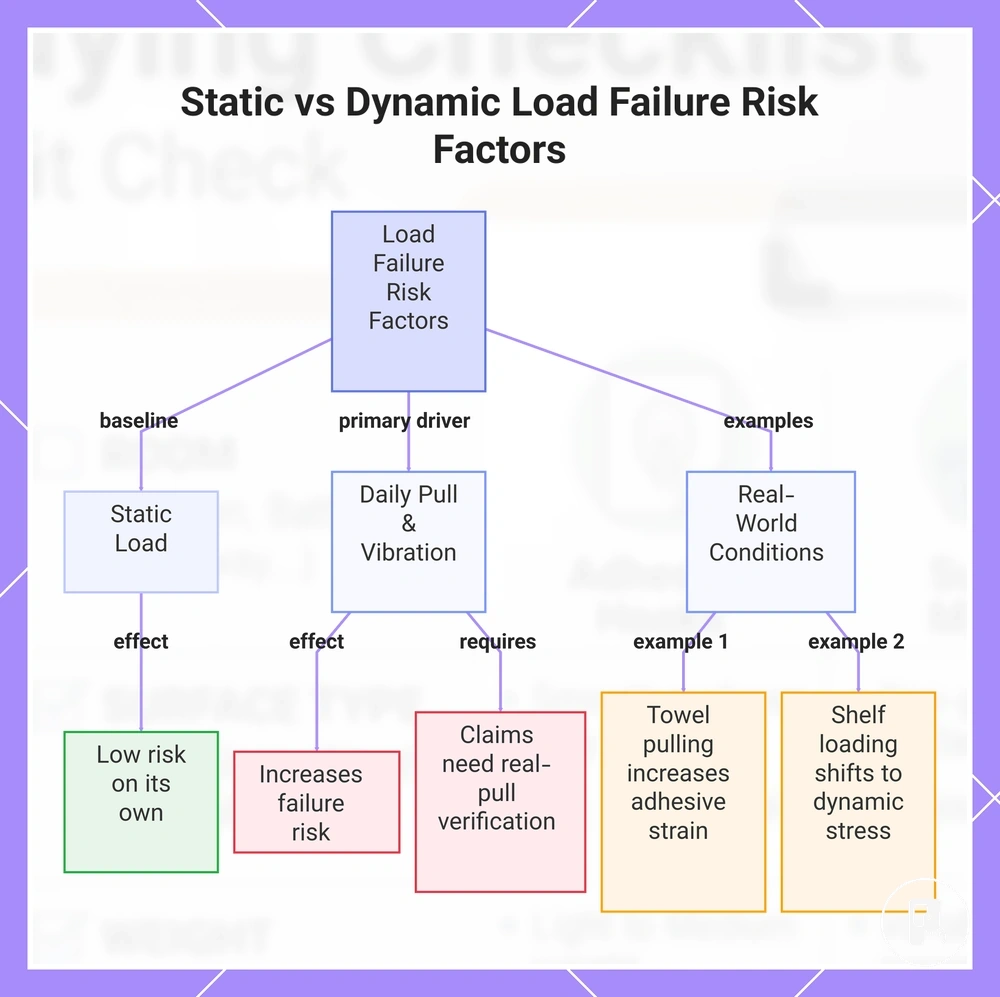
Weight, daily pull, and heavy-duty claims depend on how load shifts from static weight to repeated pulling and vibration rather than advertised strength alone. Static load refers to stationary weight, while repeated pulling introduces dynamic stress that changes how surfaces behave under use. In many cases, failure risk is driven more by daily pull and vibration than by the stated weight capacity, so evaluation separates static weight from daily pull.
Handling conditions and risk implications:
- Towel pulling + daily pull stress may increase adhesive strain even when static weight is low
- Shelf loading + weight distribution depends on contact area and can shift from static load to dynamic stress
- Hanging bags + dynamic load can create higher failure risk under repeated pulling and movement
- Bathroom caddy use + humidity and vibration may reduce stability beyond static weight expectations
- Heavy-duty claims + advertised strength require verification under real daily pull conditions rather than static load only
This chart explains why failure risk depends more on daily pulling and vibration than on static weight, with real-world examples and verification requirements.
Mounting Method Fit
Mounting method fit depends on surface, load, and removability expectations, because each no-drill option behaves differently under real use conditions. Adhesive, suction, tension, and clip-on approaches all respond to different constraints in a setup. This makes mounting method a direct fit decision rather than a preference choice.
In real scenarios, adhesive mounts often align with smooth painted walls or flat surfaces, while suction tends to rely on non-porous areas like tile or glass. Tension-based systems usually depend on frame pressure between two fixed points, and clip-on options require a stable attachment structure. Each mounting method must match both surface compatibility and expected load to avoid early failure or unwanted detachment.
| Mounting method | Best-fit condition | Watch-out condition | Checklist decision |
|---|---|---|---|
| Adhesive | Smooth, clean wall surfaces | Paint sensitivity or residue risk | Check surface compatibility and removability |
| Suction | Glass or tile with flat finish | Air gaps or moisture variation | Check surface seal stability |
| Tension | Two fixed opposing surfaces | Uneven pressure points or weak framing | Check load balance and frame strength |
| Clip-on | Existing ledges or attachment points | Mismatch with accessory structure | Check attachment fit and stability |
Myth-based selection often assumes one mounting method is universally reliable across all surfaces and loads. In practice, performance changes when surface conditions, weight distribution, or removal expectations differ. This makes method selection a conditional fit rather than a fixed rule.
Mounting method fit must always align with surface, load, and removability to avoid mismatch between intention and outcome. The comparison context for these choices can be expanded through compare mounting methods.
Mounting Method Fit
Mounting method fit depends on surface, load, and removability expectations, because each no-drill option behaves differently under real use conditions. Adhesive, suction, tension, and clip-on approaches all respond to different constraints in a setup. This makes mounting method a direct fit decision rather than a preference choice.
In real scenarios, adhesive mounts often align with smooth painted walls or flat surfaces, while suction tends to rely on non-porous areas like tile or glass. Tension-based systems usually depend on frame pressure between two fixed points, and clip-on options require a stable attachment structure. Each mounting method must match both surface compatibility and expected load to avoid early failure or unwanted detachment.
| Mounting method | Best-fit condition | Watch-out condition | Checklist decision |
|---|---|---|---|
| Adhesive | Smooth, clean wall surfaces | Paint sensitivity or residue risk | Check surface compatibility and removability |
| Suction | Glass or tile with flat finish | Air gaps or moisture variation | Check surface seal stability |
| Tension | Two fixed opposing surfaces | Uneven pressure points or weak framing | Check load balance and frame strength |
| Clip-on | Existing ledges or attachment points | Mismatch with accessory structure | Check attachment fit and stability |
Myth-based selection often assumes one mounting method is universally reliable across all surfaces and loads. In practice, performance changes when surface conditions, weight distribution, or removal expectations differ. This makes method selection a conditional fit rather than a fixed rule.
Mounting method fit must always align with surface, load, and removability to avoid mismatch between intention and outcome. The comparison context for these choices can be expanded through compare mounting methods.
Mounting Method Fit
Mounting method fit depends on surface, load, and removability expectations, because each no-drill option behaves differently under real use conditions. Adhesive, suction, tension, and clip-on approaches all respond to different constraints in a setup. This makes mounting method a direct fit decision rather than a preference choice.
In real scenarios, adhesive mounts often align with smooth painted walls or flat surfaces, while suction tends to rely on non-porous areas like tile or glass. Tension-based systems usually depend on frame pressure between two fixed points, and clip-on options require a stable attachment structure. Each mounting method must match both surface compatibility and expected load to avoid early failure or unwanted detachment.
| Mounting method | Best-fit condition | Watch-out condition | Checklist decision |
|---|---|---|---|
| Adhesive | Smooth, clean wall surfaces | Paint sensitivity or residue risk | Check surface compatibility and removability |
| Suction | Glass or tile with flat finish | Air gaps or moisture variation | Check surface seal stability |
| Tension | Two fixed opposing surfaces | Uneven pressure points or weak framing | Check load balance and frame strength |
| Clip-on | Existing ledges or attachment points | Mismatch with accessory structure | Check attachment fit and stability |
Myth-based selection often assumes one mounting method is universally reliable across all surfaces and loads. In practice, performance changes when surface conditions, weight distribution, or removal expectations differ. This makes method selection a conditional fit rather than a fixed rule.
Mounting method fit must always align with surface, load, and removability to avoid mismatch between intention and outcome. The comparison context for these choices can be expanded through compare mounting methods.
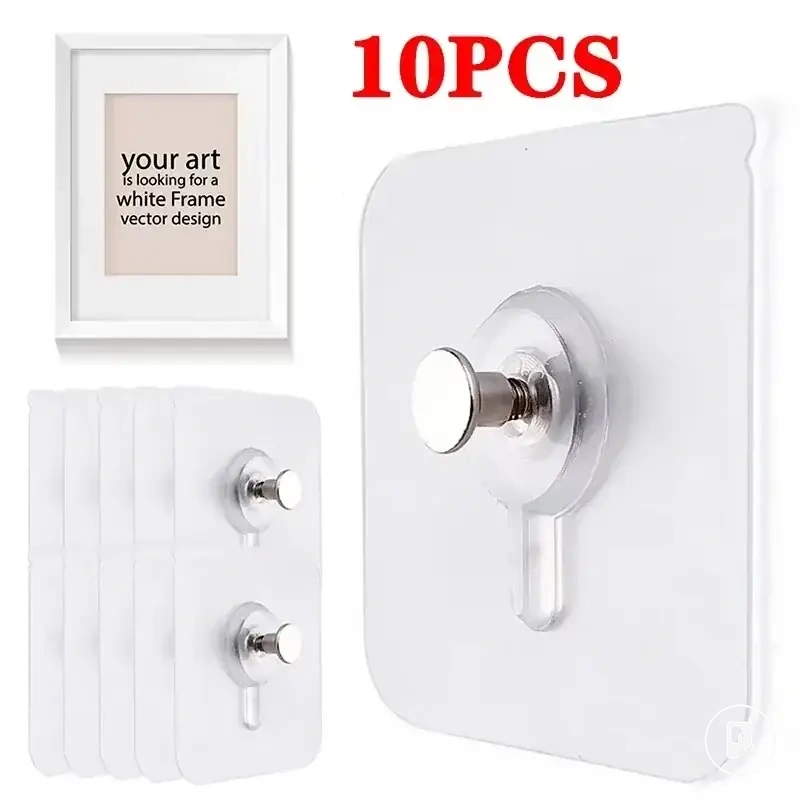
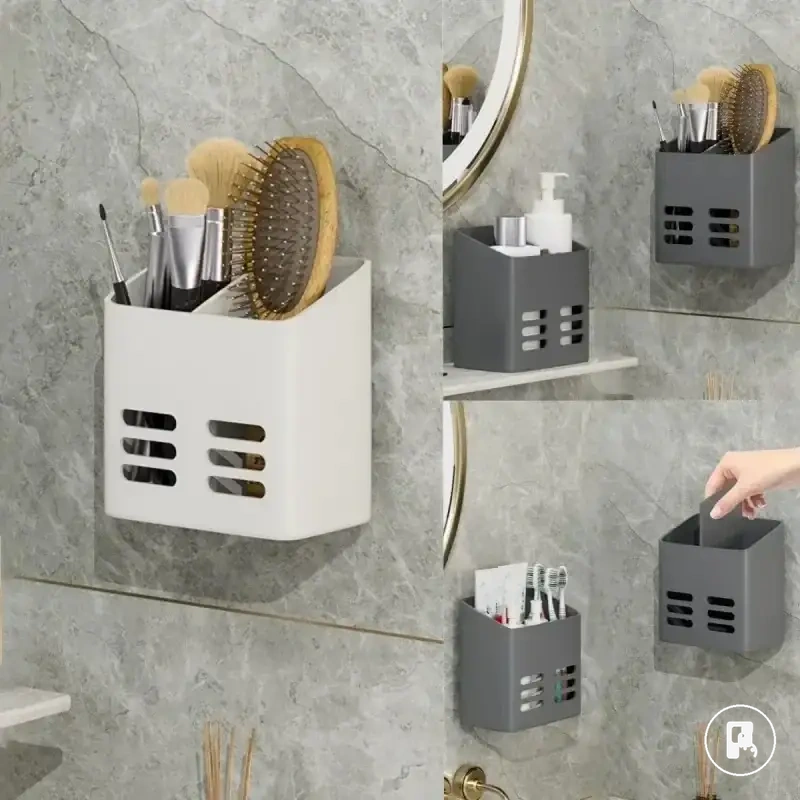
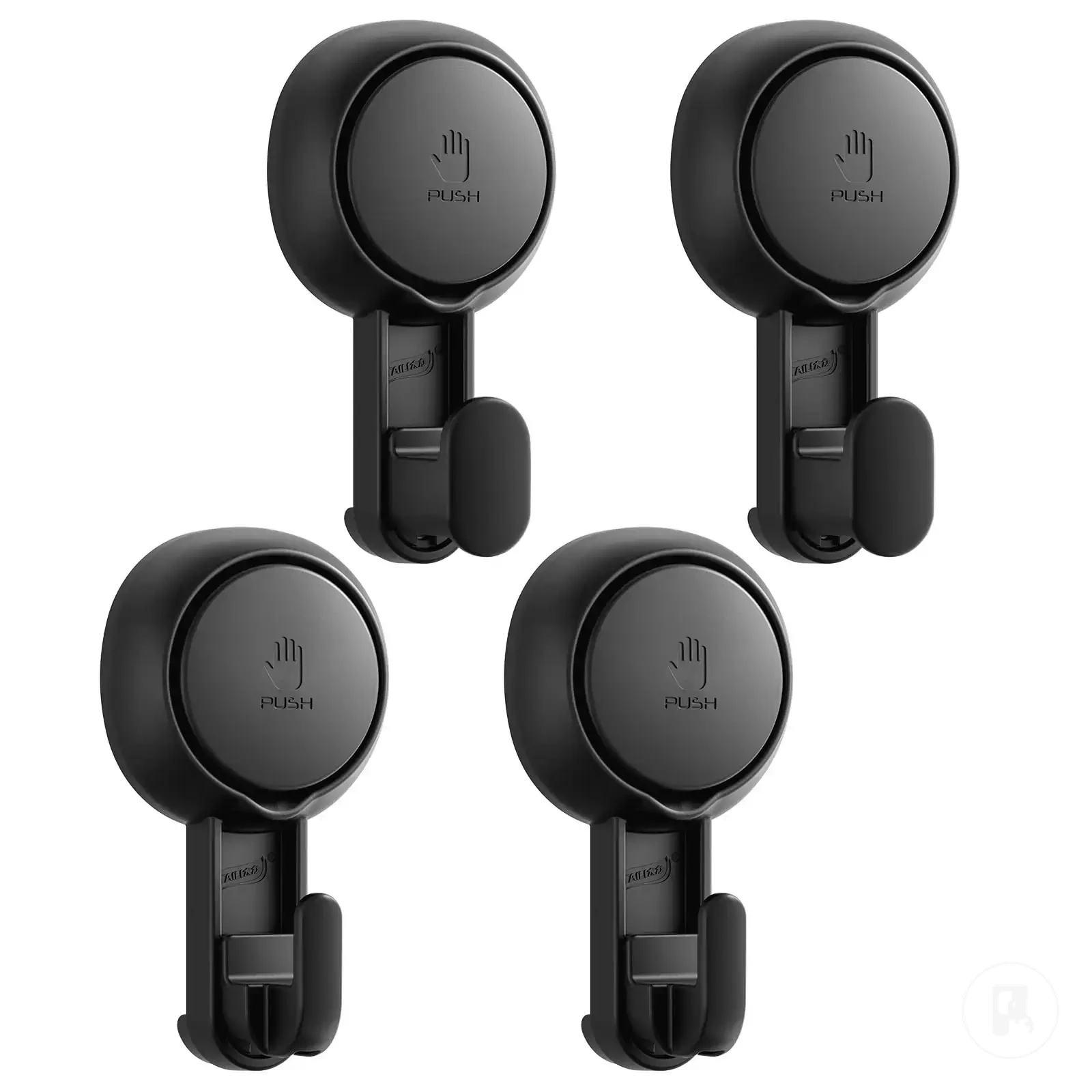
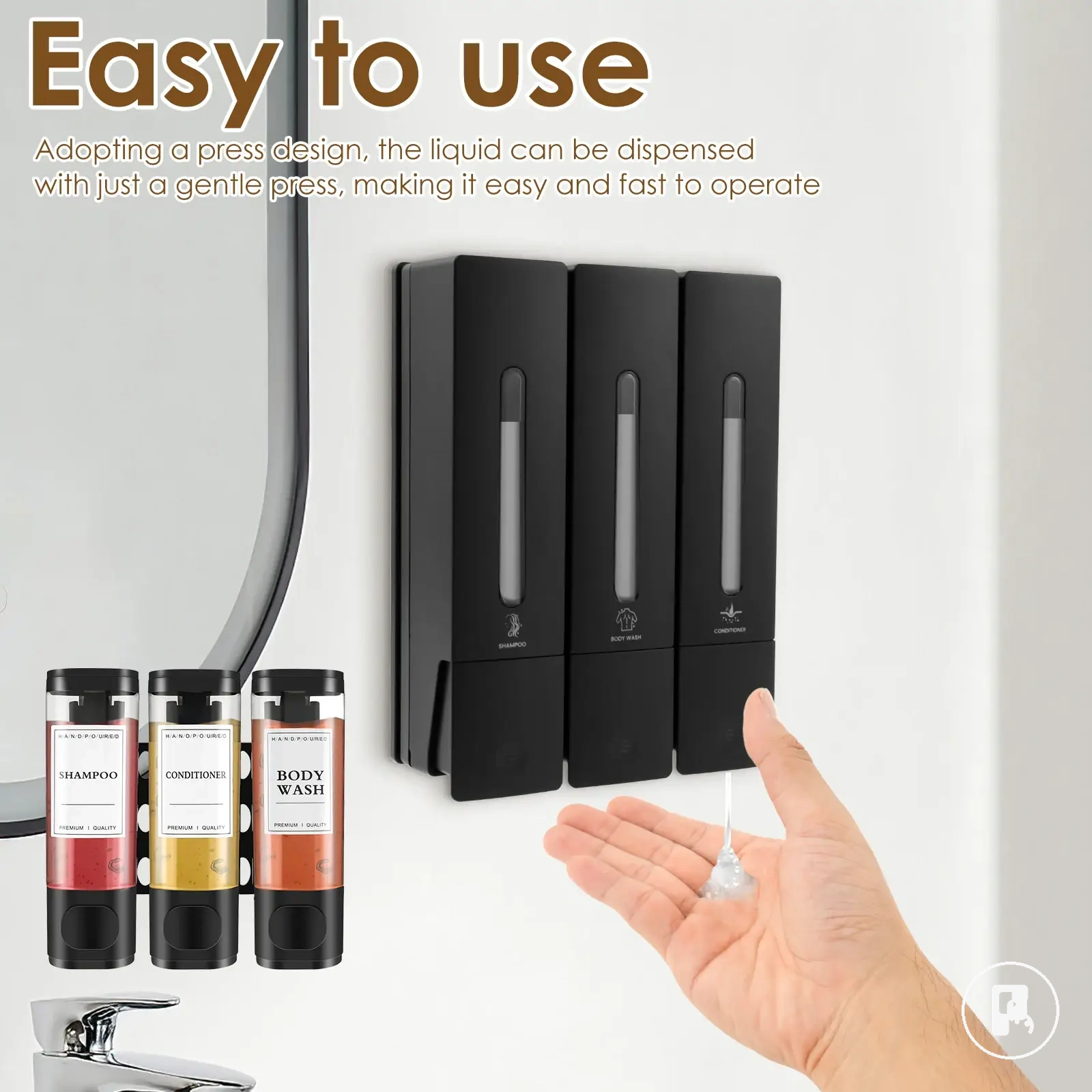
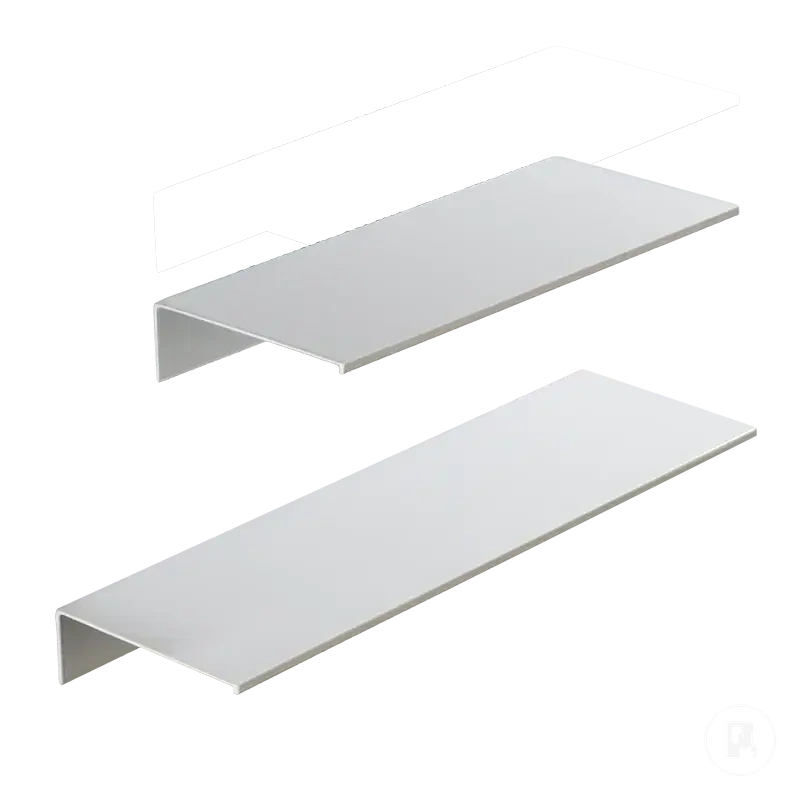
Here are product examples that may make comparison easier. Before buying, always review the compatibility criteria, essential features, and product details.
Quantity, Sizes, and Matching Pieces
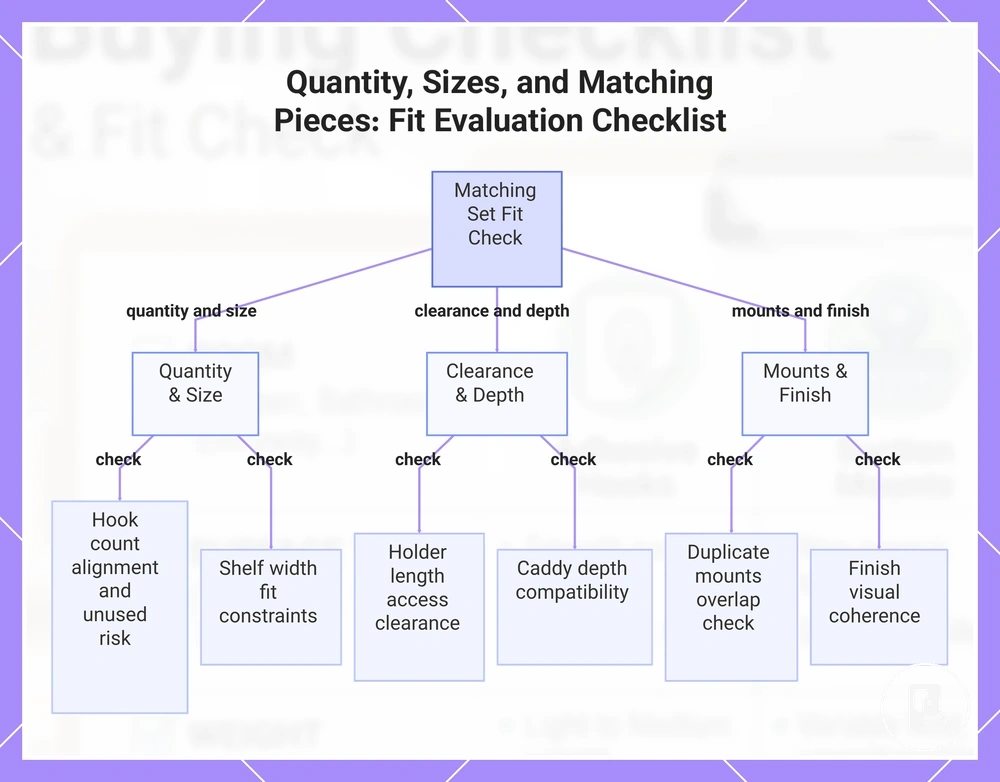
Quantity, sizes, and matching pieces depend on how piece count, dimensions, and design consistency align with the intended setup. The decision connects quantity and sizes directly to fit requirements, including number of hooks, shelf width, holder length, caddy depth, duplicate mounts, and finish consistency. These attributes together determine how well the set matches the parent bundle decision.
Key attributes to check include:
- Quantity + number of hooks + alignment with intended setup and risk of unused items
- Sizes + shelf width + available wall space and fit constraints
- Holder length + access clearance + usability within placement limits
- Caddy depth + storage need + compatibility with bathroom or wet-area constraints
- Duplicate mounts + redundancy check + overlap in installation or usage points
- Finish consistency + matching pieces + visual and functional coherence across items
This chart shows the key attributes to check when evaluating whether a set of bathroom accessories fits the intended setup in terms of quantity, size, clearance, and consistency.
Mounting Method Fit
Mounting method fit depends on surface, load, and removability expectations, because each no-drill option behaves differently under real use conditions. Adhesive, suction, tension, and clip-on approaches all respond to different constraints in a setup. This makes mounting method a direct fit decision rather than a preference choice.
In real scenarios, adhesive mounts often align with smooth painted walls or flat surfaces, while suction tends to rely on non-porous areas like tile or glass. Tension-based systems usually depend on frame pressure between two fixed points, and clip-on options require a stable attachment structure. Each mounting method must match both surface compatibility and expected load to avoid early failure or unwanted detachment.
| Mounting method | Best-fit condition | Watch-out condition | Checklist decision |
|---|---|---|---|
| Adhesive | Smooth, clean wall surfaces | Paint sensitivity or residue risk | Check surface compatibility and removability |
| Suction | Glass or tile with flat finish | Air gaps or moisture variation | Check surface seal stability |
| Tension | Two fixed opposing surfaces | Uneven pressure points or weak framing | Check load balance and frame strength |
| Clip-on | Existing ledges or attachment points | Mismatch with accessory structure | Check attachment fit and stability |
Myth-based selection often assumes one mounting method is universally reliable across all surfaces and loads. In practice, performance changes when surface conditions, weight distribution, or removal expectations differ. This makes method selection a conditional fit rather than a fixed rule.
Mounting method fit must always align with surface, load, and removability to avoid mismatch between intention and outcome. The comparison context for these choices can be expanded through compare mounting methods.
Here are product examples that may make comparison easier. Before buying, always review the compatibility criteria, essential features, and product details.