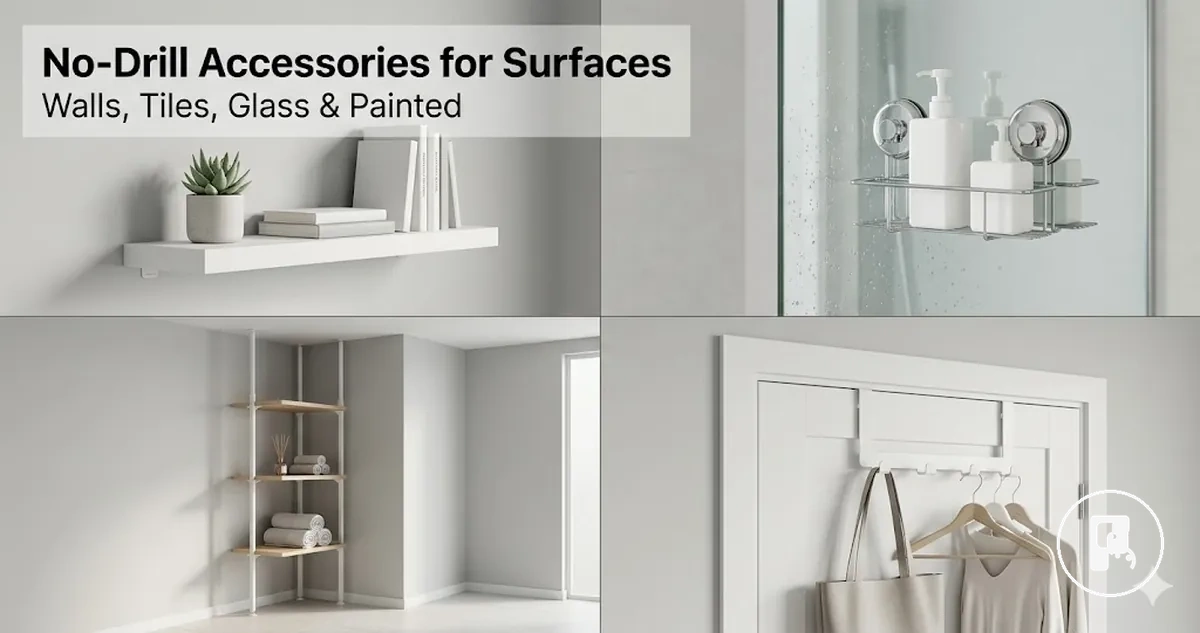
No-Drill Home Accessories Surface Compatibility Guide
No-drill home accessories are surface-compatible only when the material, surface condition, and mounting method align correctly. Adhesive and suction systems behave differently depending on whether the surface is smooth or textured, sealed or unstable. Cleanliness, coating stability, and moisture exposure also influence how well the accessory holds. Because of these variations, surface condition becomes the main decision frame for evaluating fit and holding strength.
Surface compatibility refers to how well a wall or object surface supports a no-drill accessory through adhesive or suction contact. It evaluates whether the surface allows stable contact, consistent grip, and controlled removal behavior under real use conditions. This includes how the material interacts with residue, texture, and coating stability rather than focusing on product appearance or claims. The goal is to understand fit based on physical conditions instead of assumptions about universal performance.
In practice, different surfaces like painted wall, tile, glass, metal, and mirrors behave differently depending on their finish and condition. Smooth surfaces often allow more consistent adhesive or suction contact, while textured surface areas can interrupt proper bonding. Painted and coated walls may vary based on stability, while tile and glass can perform differently depending on residue or moisture presence. These variations make surface evaluation necessary before selecting any mounting method.
The overall decision depends on aligning surface material, surface condition, and the chosen mounting method in a consistent way. No-drill systems do not respond the same across all environments, so compatibility must be assessed rather than assumed. When these factors align, holding strength is more stable, and removal risk becomes more predictable within normal usage limits.
What surface compatibility means for no-drill home accessories
Surface compatibility is the relationship between no-drill home accessories, its mounting method, and the surface condition that determines how well it can hold. It depends on material, texture, coating stability, and cleanliness, which together influence hold consistency and removal risk.
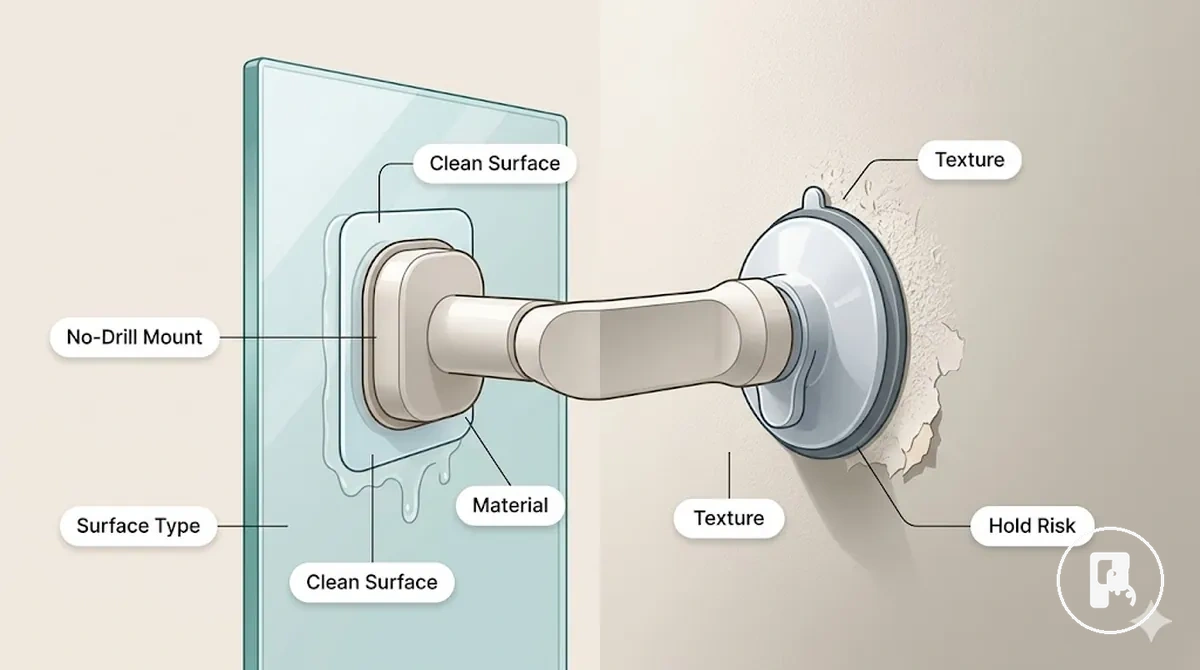
The same no-drill accessory may behave differently across surfaces because material structure, coating quality, and surface cleanliness change how adhesive or suction contact performs. A stable sealed surface can support more consistent contact, while uneven texture or weak coating stability can interrupt bonding and increase removal risk. This variation shows that compatibility is not identical to installation technique or load capacity, which depend on separate conditions.
For example, an adhesive mount may hold steadily on clean glass due to smooth surface contact, while the same mount can behave less predictably on a painted wall where coating stability varies. Suction-based mounts can also lose consistency on textured surface areas where full contact is limited, increasing potential release risk under use conditions.
Surface types that usually suit no-drill accessories
Surface suitability for no-drill accessories depends on how smooth, sealed, and clean the surface is, with smooth sealed tile, glass, metal, and mirror surfaces usually offering more stable contact. Painted sealed wall surfaces can also work when the coating is stable, while textured wall areas, porous material, and uneven surface types often introduce higher variability. In many cases, surface condition can override the base material when judging compatibility.
Smooth sealed surfaces such as smooth sealed tile, glass, metal, and mirrors typically allow more consistent contact for adhesive or suction mounting methods. These surfaces reduce interruptions caused by texture and support more even pressure distribution across the contact area. Residue, dust, or grout line interference can still reduce performance, which shows that cleanliness and coating quality directly influence hold behavior.
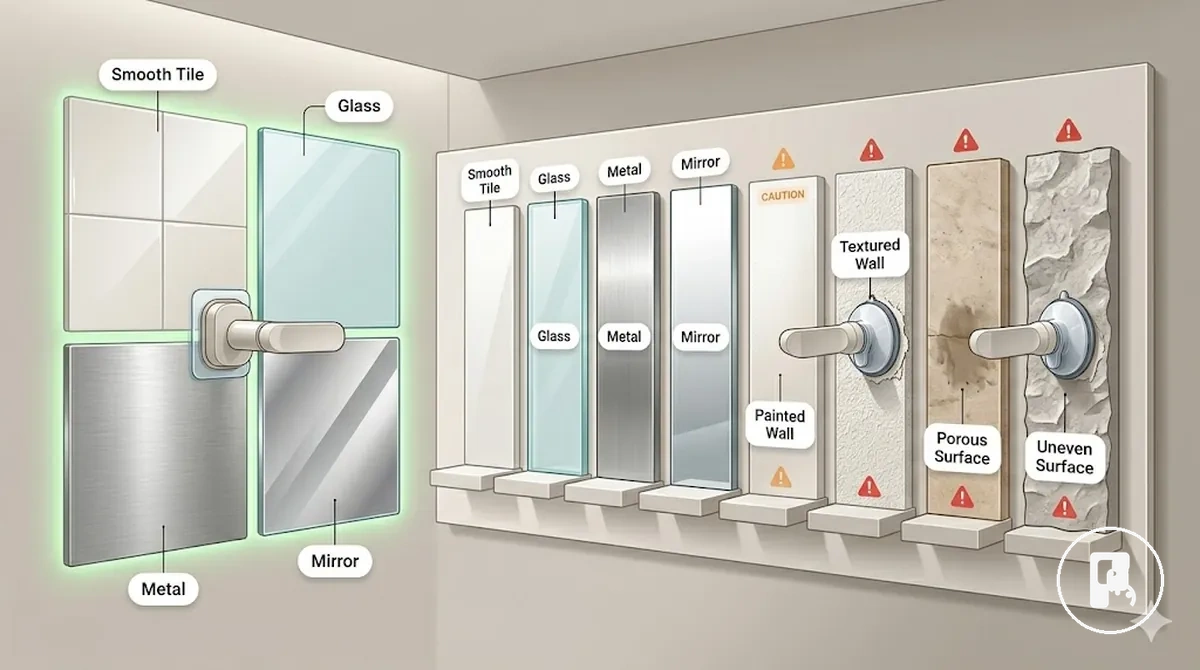
The following surface groups organize common compatibility patterns for no-drill accessories, showing how surface type and condition affect suitability and caution levels. This structure helps clarify where hold is usually more consistent and where removal risk or instability may increase due to surface structure.
- smooth sealed tile — usually suitable when clean and sealed, but grout lines and residue can reduce contact stability
- glass — typically suitable due to smooth non-porous contact, with residue or dust lowering adhesion consistency
- metal — often suitable when coating is stable and clean, but surface wear may affect mounting consistency
- mirror — usually suitable on sealed backing with clean contact, while contamination can reduce hold reliability
- painted sealed wall — condition-dependent; stable coatings may support adhesion, while weak paint layers increase removal risk
- textured wall & porous material & uneven surface — generally lower suitability due to reduced contact area and higher variability in hold
Painted, textured, porous, and uneven surfaces require closer attention because small changes in coating stability, dust, or surface irregularity can significantly affect contact behavior. Even within the same material group, differences in finish quality or wear level can shift suitability from moderate to risky.
Overall compatibility follows a pattern where smoother and more sealed surfaces tend to support more consistent performance, while rougher or more absorbent surfaces increase uncertainty in hold and removal risk. Evaluating both surface type and condition together provides a more reliable decision framework than relying on material alone.
Smooth tile, glass, metal, and mirror surfaces
Smooth tile, glass, metal, and mirror surfaces refer to smooth non-porous surfaces that provide a cleaner contact area for no-drill accessories due to their sealed finish and reduced surface interruption. These surfaces typically allow more consistent adhesive or suction contact because the contact area is more even. However, residue, grout, and edge conditions can still interrupt performance and affect reliability.
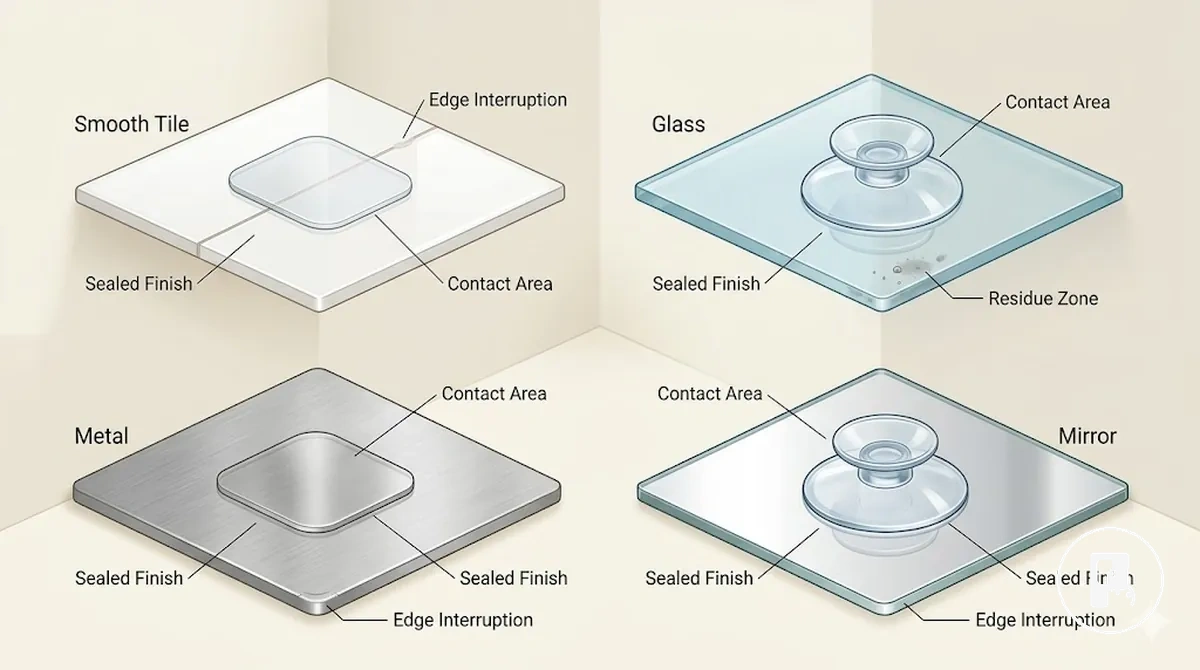
The annotated view highlights how smooth sealed finishes create clearer contact zones while also showing where interruptions may appear. This makes it easier to understand how contact area quality influences mounting stability across different smooth surfaces.
- smooth tile — usually offers stable contact on sealed finish, but grout lines or residue can interrupt adhesion
- glass — provides strong non-porous contact area, while dust or film layers may reduce suction consistency
- metal — supports clean surface bonding when sealed, but wear or coating variation can affect contact stability
- mirror — allows even contact on sealed backing, though edge areas or contamination may increase removal risk
In practice, these surfaces perform best when the contact area remains uninterrupted and clean, while small changes such as residue buildup, edge irregularities, or surface films can shift suitability. This makes surface condition as important as the base material when evaluating hold and removal behavior for no-drill accessories.
Painted and sealed wall surfaces
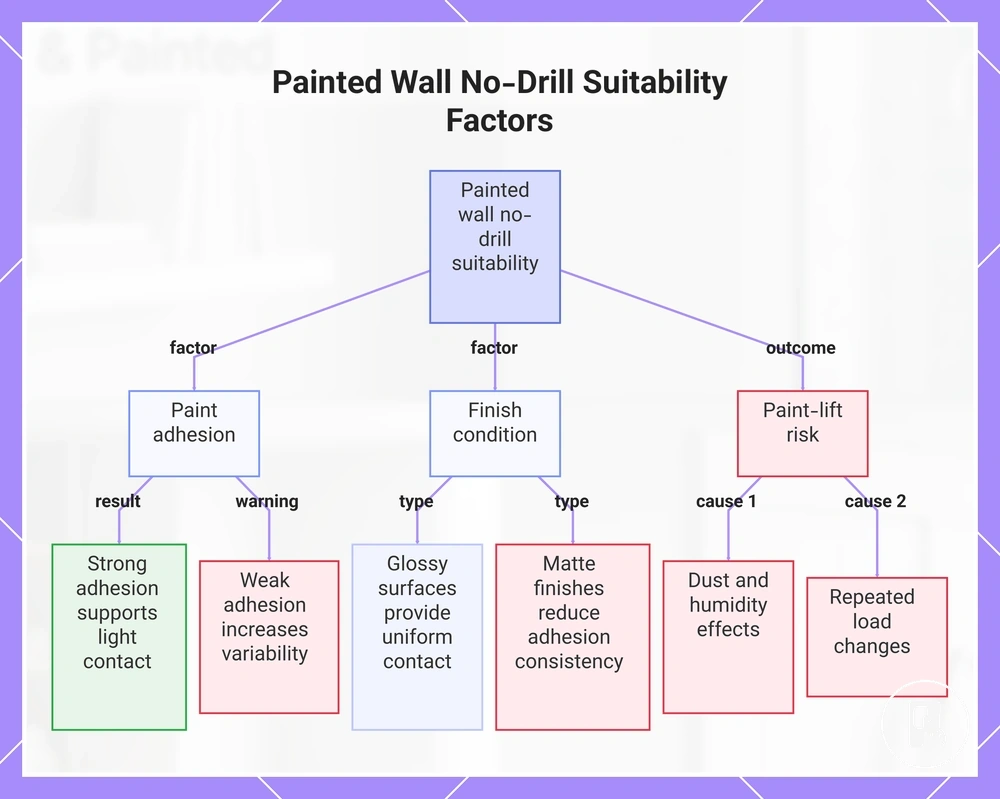
Painted wall and sealed wall suitability for no-drill accessories depends on paint adhesion, finish condition, and the removable mounting system such as a removable strip or hook. A stable sealed wall with strong paint adhesion can support light contact more consistently, while weaker or unstable coating areas increase variability. Dust and humidity can further affect surface stability and raise paint-lift risk during use or removal.
Gloss or matte finish on a painted wall influences how evenly a hook or removable strip bonds through adhesive contact. Glossy sealed surfaces may provide more uniform contact area, while matte finishes can introduce micro-texture that reduces consistent adhesion. When dust buildup, aging paint layers, or early peeling are present, paint-lift risk may increase, especially under repeated load changes, so suitability remains conditional based on finish condition.
This chart shows the key factors determining whether a painted or sealed wall surface can support no-drill accessories, including paint adhesion, finish condition, and paint-lift risk.
Textured, porous, and uneven surfaces
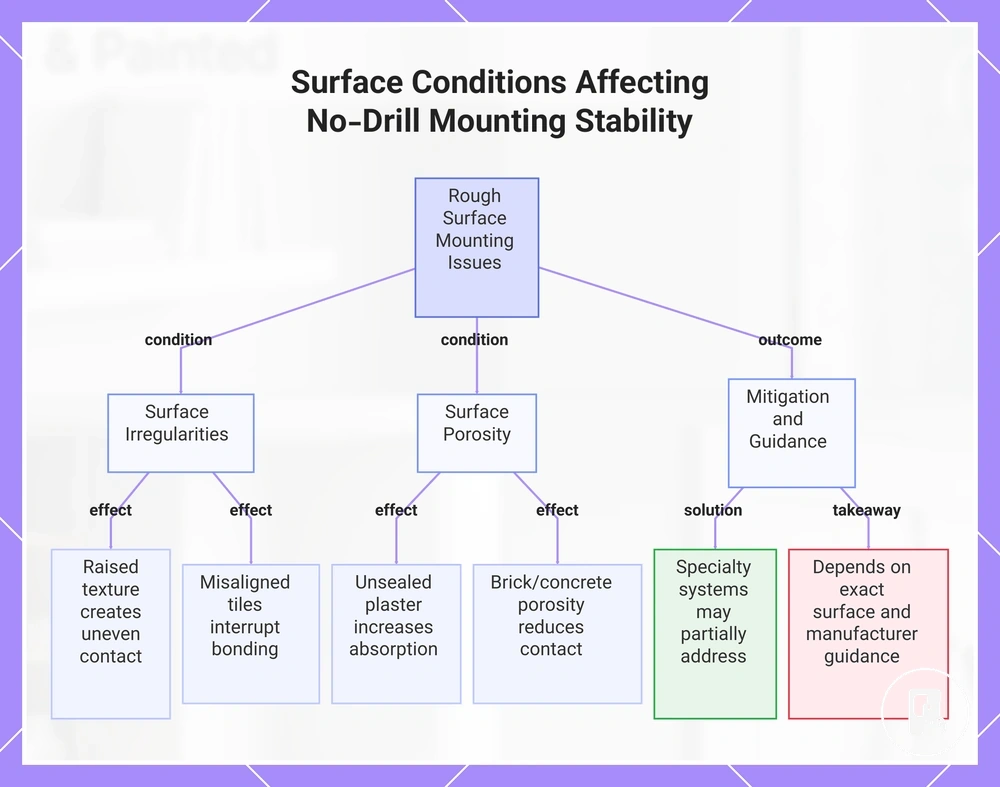
Textured surface, porous surface, and uneven surface conditions can reduce consistent contact for many no-drill mounting methods because raised texture and surface gaps interrupt adhesion. Contact loss becomes more likely when the surface is not flat or sealed, which makes holding performance less predictable depending on the exact material and finish condition. Suitability is therefore conditional and depends on how stable the contact area can remain.
The following conditions help identify where contact loss and mounting instability may occur across common rough or irregular surfaces:
- raised texture on a textured surface — creates uneven contact points, leading to partial adhesion and reduced stability
- unsealed plaster or rough paint — increases absorption and weakens adhesive contact, raising variability in hold
- brick or concrete porous surface — surface porosity and gaps reduce full contact area, often resulting in weaker grip
- uneven tile or misaligned surface — surface gaps interrupt bonding zones and can limit consistent mounting support
- general surface irregularity and surface gaps — combined texture and porosity may increase contact loss, making suitability depend on product-specific guidance
In some cases, specialty mounting systems may partially address these challenges, but suitability still depends on the exact surface condition and manufacturer guidance rather than the surface category alone.
This chart shows the main surface conditions that reduce adhesion for no-drill mounting methods and the resulting guidance for suitability.
Adhesive and suction compatibility by surface condition
Adhesive and suction compatibility depends on different surface conditions, especially how each mounting method interacts with contact quality. Adhesive systems such as adhesive pads and removable strip mounts rely on stable bonding with a clean prepared surface, while suction cups depend on air-tight contact on smooth areas. This creates a clear comparison based on surface condition, not mounting strength alone.
Adhesive and removable strip mounts usually depend on a sealed surface with stable coating and low surface texture to maintain consistent adhesive contact. Clean preparation is critical because dust, humidity, or coating instability can weaken bonding and increase failure risk over time. Painted wall areas may vary in performance depending on finish condition, which can change how reliably adhesive contact holds under load.
Suction cups depend more strictly on non-porous surface conditions where smoothness allows air-tight sealing without interruptions. Any surface texture, gaps, or uneven areas can create air leaks that reduce suction performance and increase release risk. When the surface is clean, flat, and non-porous, suction contact becomes more stable compared to irregular surfaces. See matching mounting methods to surfaces for deeper comparison of how surface condition influences each method.
| Mount type | Surface condition needed | Main caution | Better-fit situation |
|---|---|---|---|
| Adhesive / removable strip | Sealed surface, clean preparation, low surface texture | Dust, humidity, coating instability | Stable painted or sealed wall with light load use |
| Suction cup | Non-porous surface, smooth finish, air-tight contact | Failure risk on texture, gaps, uneven surfaces | Glass, tile, or other smooth sealed surfaces |
Adhesive accessories on clean sealed surfaces
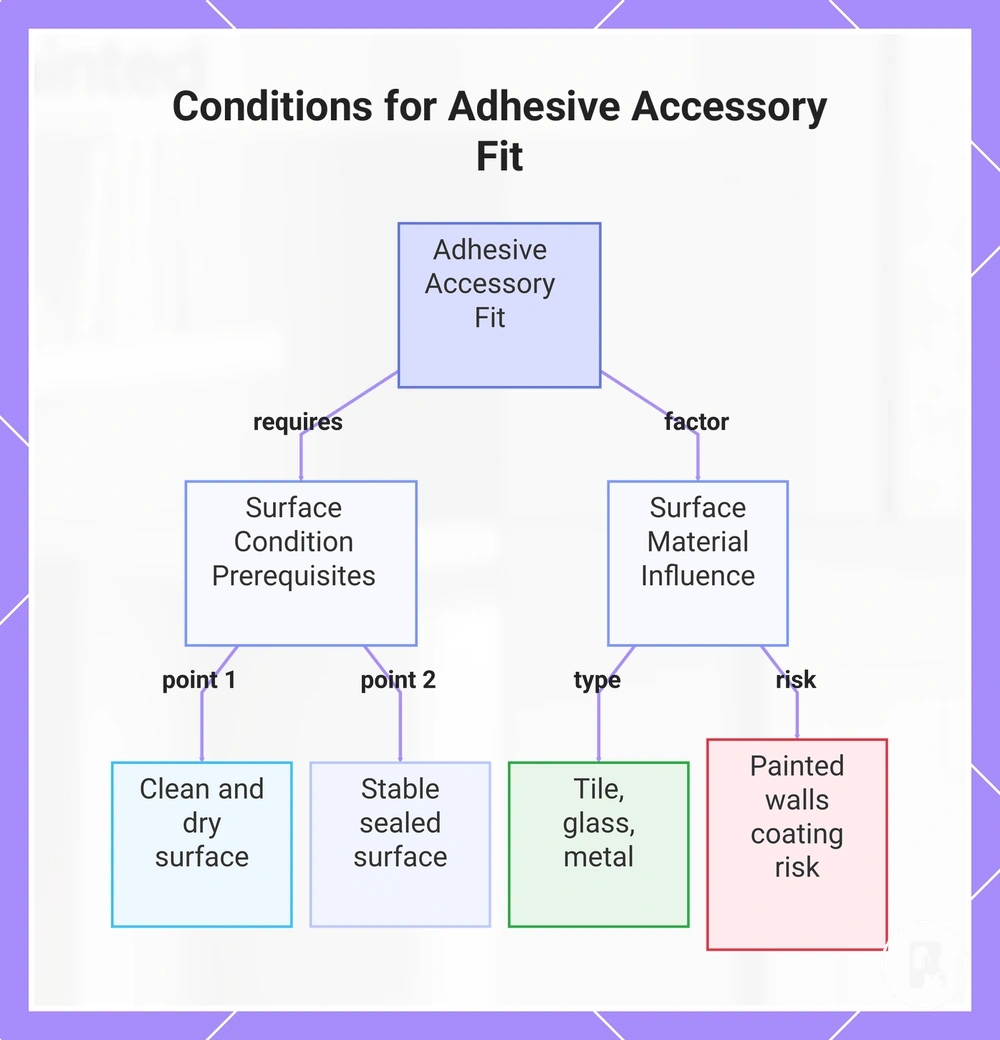
An adhesive accessory and adhesive pad depend on a clean surface, dry surface, and stable sealed surface to maintain consistent contact between the adhesive pad and the mounting area. Adhesive performance is directly tied to coating stability, because dust, soap residue, oil, or moisture can interrupt contact and increase failure risk. When the surface is not properly stable or prepared, adhesive bonding becomes less predictable and may shift under load.
Clean sealed surfaces such as tile, glass, and metal typically support more consistent adhesive contact because they provide smoother and less porous interaction points. However, even on these surfaces, surface contamination like dust, soap residue, or oil can reduce adhesion quality and weaken holding behavior over time. Painted walls may also vary depending on coating stability, where peeling paint or weak surface layers can increase removal risk and reduce adhesive reliability. In practice, adhesive accessory fit remains conditional and depends on both surface material and surface condition.
This chart shows the key surface conditions and material factors that determine reliable adhesive bonding.
Suction accessories on smooth non-porous surfaces
A suction accessory and suction cup depend on a smooth non-porous surface where stable air-tight contact can form and remain consistent. This means the surface must allow continuous sealing without air gaps, because suction performance relies on uninterrupted contact between the suction cup and the surface. When the surface is not sufficiently smooth or contains micro-texture, the seal can weaken and increase release risk.
Glass, glossy tile, mirror, and smooth metal generally support suction accessory placement because they provide non-porous contact with minimal interruption. However, curvature can reduce sealing stability, and even small surface texture variations may introduce air gaps that weaken hold behavior. Moisture and surface contamination can also affect how consistently the suction cup maintains contact. In most cases, suitability depends on how flat, clean, and non-porous the surface remains during use.
Removable strips and hooks on painted walls
Removable strip and hook compatibility depends on painted wall stability, especially paint adhesion and wall finish condition that determine how securely the adhesive strip can sit on the surface. When the painted surface has uneven coating stability, dust, or weak bonding layers, the interaction between removable strip and painted wall can become inconsistent. In such cases, paint-lift risk may increase depending on surface condition and adhesive contact behavior.
Light-use accessory placement with a hook or removable strip on a painted wall varies with wall finish quality, humidity exposure, and surface dust, since these factors influence adhesive contact stability over time. Object weight category also affects suitability, where lighter loads usually place less stress on paint adhesion compared to heavier concentration points. Removal angle can influence how the strip separates from the wall, but it remains a secondary factor compared to surface compatibility. A clear boundary exists between compatibility conditions and removal technique, which should be treated separately.
Surface conditions that change holding strength
Holding strength can change significantly with surface condition even when a surface initially appears compatible, because contamination, texture, porosity, and coating stability directly influence contact quality and bond behavior. The same material can therefore show different holding strength depending on how its surface condition behaves at the point of use. This creates a clear criteria-based decision logic for evaluating reliability. :contentReference[oaicite:0]{index=0}
Contamination, texture, porosity, and coating stability affect how consistently a surface can maintain grip and contact. Contamination such as dust or residue reduces effective contact area and weakens bond formation, while higher texture disrupts uniform contact points. Porosity can absorb or disperse bonding interaction, reducing stability, and unstable coating layers may weaken under stress, lowering contact quality. Together, these conditions define whether holding strength remains stable or becomes inconsistent.
Moisture, heat, and regular load exposure further influence long-term surface behavior. Moisture can weaken adhesion or reduce friction-based stability, while heat may alter material response and reduce bonding consistency in certain conditions. Repeated regular load exposure can gradually shift contact balance and introduce reliability risk over time. These factors form the decision implication for whether a surface remains dependable under continued use conditions.
| Surface condition | What it changes | Compatibility signal | Caution |
|---|---|---|---|
| Contamination | Reduces contact efficiency and bond quality | Weak or unstable hold | Dust, oil, or residue lowers reliability |
| Texture / porosity | Interrupts or absorbs contact interaction | Uneven or reduced grip | Higher risk of unstable holding strength |
| Coating stability | Affects surface layer integrity under stress | Variable bonding behavior | Weak coatings may degrade contact |
| Moisture / heat | Alters adhesion or material response | Condition-dependent stability | Can reduce reliability over time |
| Regular load exposure | Gradual change in contact stability | Progressive weakening signal | Increases long-term reliability risk |
Dirt, soap residue, and surface contamination
Dirt, soap residue, and surface contamination interrupt adhesive contact and suction contact by blocking direct surface interaction, which increases hold risk even on otherwise suitable surfaces. Dust, limescale, oil, cosmetics, and moisture can each reduce clean contact by weakening surface preparation conditions and creating uneven bonding zones. When contamination is present, holding behavior becomes less predictable because contact quality is no longer uniform across the surface area.
Dirt and dust typically accumulate on exposed wall surfaces and reduce adhesive contact by lowering surface grip and increasing weak bonding points. Soap residue and limescale often build up on bathroom tile surfaces, where they interfere with suction contact and reduce sealing consistency due to surface film formation. Oil and cosmetics commonly affect kitchen and vanity-adjacent walls, where they disrupt adhesive contact and reduce stability, while moisture can weaken both adhesive contact and suction contact by introducing ongoing reliability risk in humid conditions.
prepare surfaces before mounting becomes relevant when contamination is the main barrier on an otherwise smooth sealed surface, because dirt, soap residue, and other deposits reduce contact quality rather than changing the material itself. In such cases, surface preparation acts as a supporting condition that may improve compatibility, but it does not guarantee a secure hold under all conditions.
Texture, porosity, and coating stability
Texture, porosity, and coating stability affect the available contact area for no-drill mounting by changing how consistently a surface can support adhesive contact and suction contact. Texture reduces uniform contact points, porosity can weaken bonding by absorbing interaction into the surface, and coating stability determines whether the outer layer remains intact under load. Together, these factors shape overall compatibility risk based on surface condition rather than material alone.
Rough paint and unsealed plaster reduce consistent contact because surface irregularities interrupt stable bonding zones and increase variability in grip. Brick, concrete, and porous stone introduce higher porosity, which can weaken adhesive contact by reducing effective surface engagement. Peeling paint and unstable coating conditions further increase risk because surface layers may shift or separate, affecting both adhesive contact and suction contact. In comparison, a rough but stable surface may still support partial contact, while a rough and unstable surface typically increases compatibility risk due to coating movement and loss of stability.
Moisture, heat, and regular load exposure
Moisture, heat, and regular load exposure may change surface compatibility after mounting by affecting adhesive reliability and suction reliability over time. Steam, condensation, and warm surface conditions can weaken contact stability, while repeated use can gradually shift how securely a mounted item holds under changing load direction. In many cases, adhesive reliability and suction reliability become condition-dependent rather than fixed after installation.
In bathrooms and kitchens, moisture, steam, and condensation can reduce consistent adhesive reliability, especially on surfaces frequently exposed to water or humidity. Heat from cooking areas or warm surface zones may also influence bonding behavior, while repeated pulling on a towel or organizer introduces changing load direction that can stress contact points. These effects vary based on surface condition and usage intensity, and they become more significant when moisture is the dominant condition, forming a boundary where wet-area no-drill accessories considerations take priority.
Choosing no-drill accessories when surface fit is uncertain
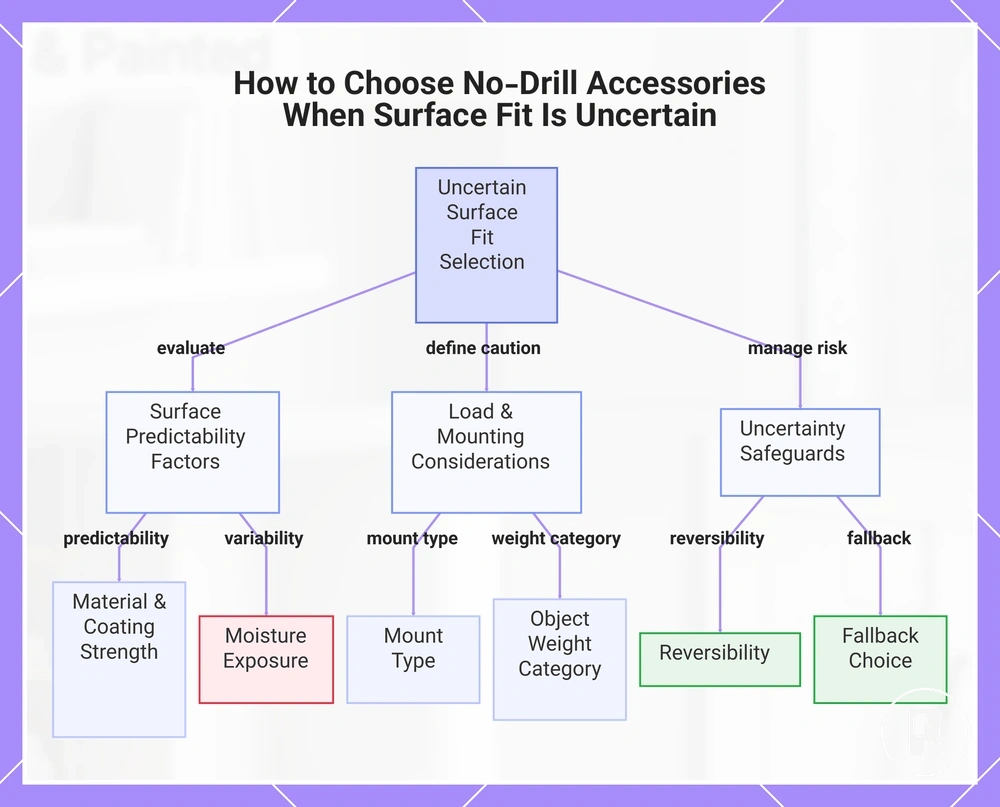
Uncertain surface fit requires cautious selection based on material, coating strength, mount type, object weight category, and moisture exposure. Reversibility and fallback choice also matter because borderline surfaces may not behave consistently under real use conditions. In practice, uncertain surface fit is managed through evaluation and controlled decision-making rather than assuming a fixed compatibility outcome.
On a borderline surface, material type and coating strength influence how predictable the contact behavior will be under load. Mixed or uneven surfaces can reduce consistency, especially when moisture exposure introduces additional variability in adhesion or suction performance. Surface test thinking helps interpret whether the condition behaves closer to stable or unstable contact, turning uncertainty into a clearer decision direction based on observed surface response.
Mount type and object weight category define how cautious the selection should be when compatibility is unclear. Lighter object weight category with reversible mounting may reduce risk in uncertain cases, while heavier loads increase dependency on stable surface behavior and increase sensitivity to weak coating conditions. When uncertainty remains after evaluation, fallback choice becomes relevant as a secondary option for maintaining safer surface alignment.
Choosing under uncertainty works best when the decision checklist organizes surface signals into structured criteria. This includes material, coating strength, moisture exposure, mount type, object weight category, reversibility, and fallback choice as the main decision points for evaluating borderline surfaces. For practical execution, follow surface-safe installation steps to align selection with controlled application behavior.
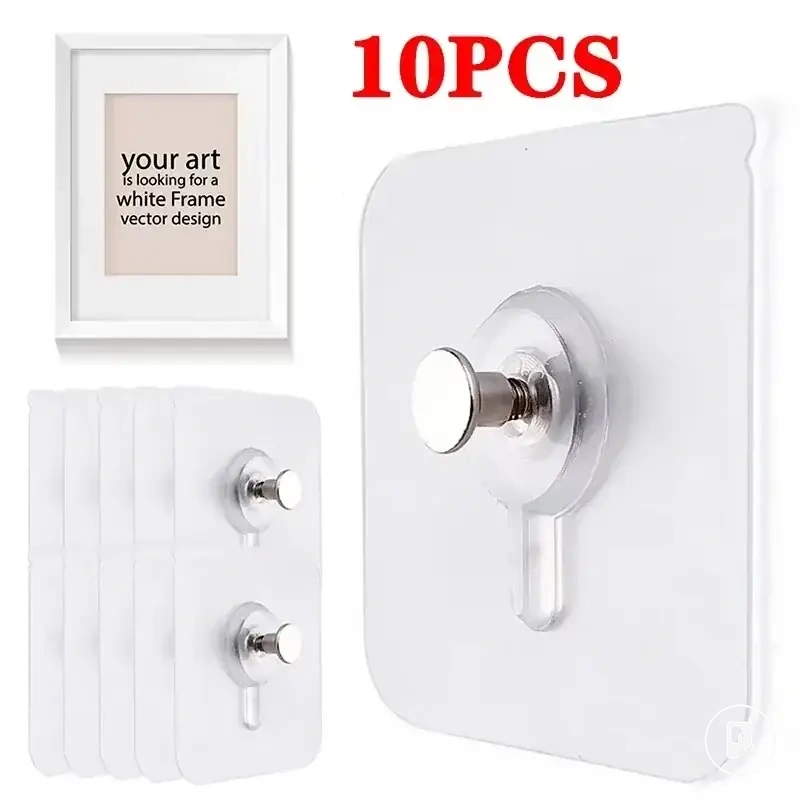
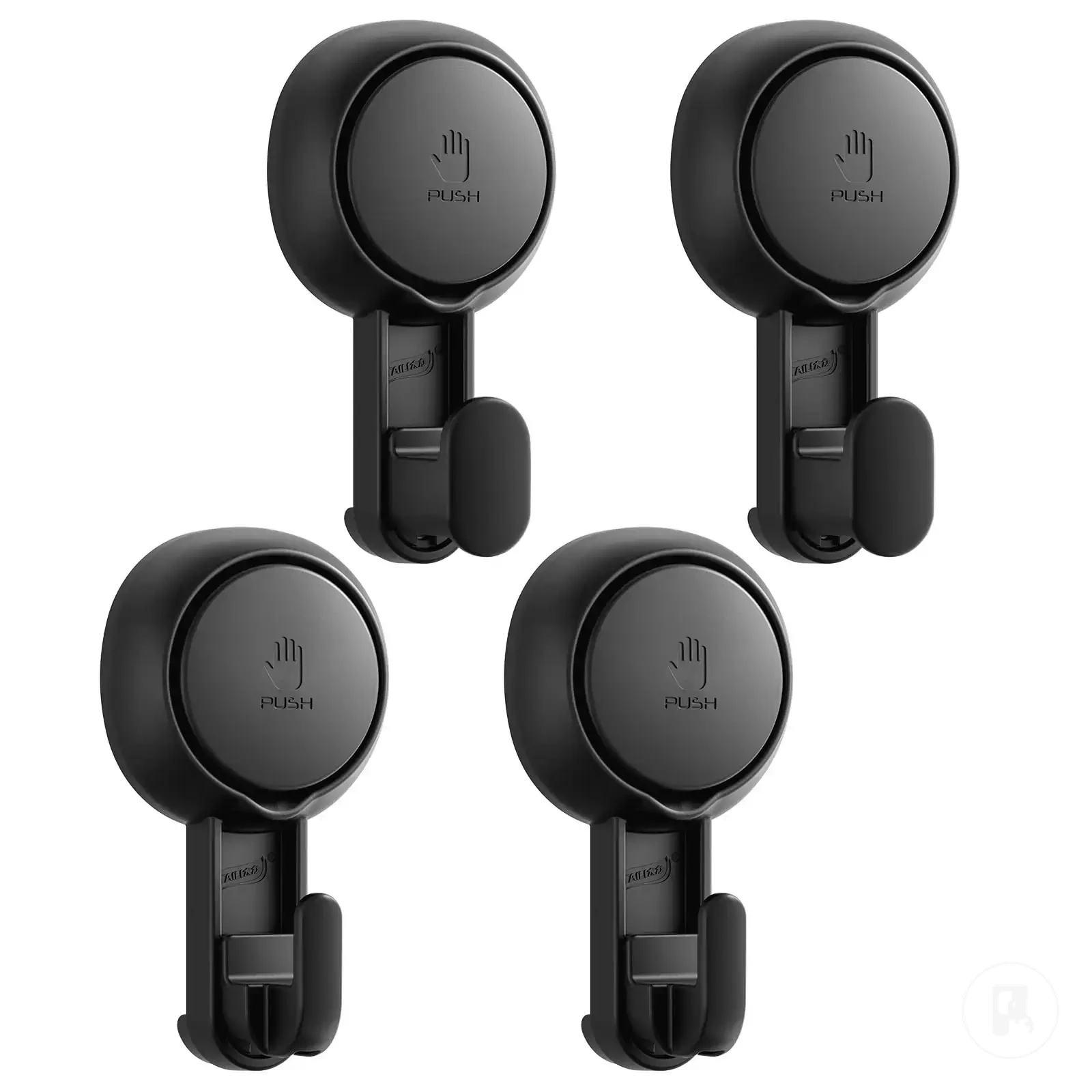
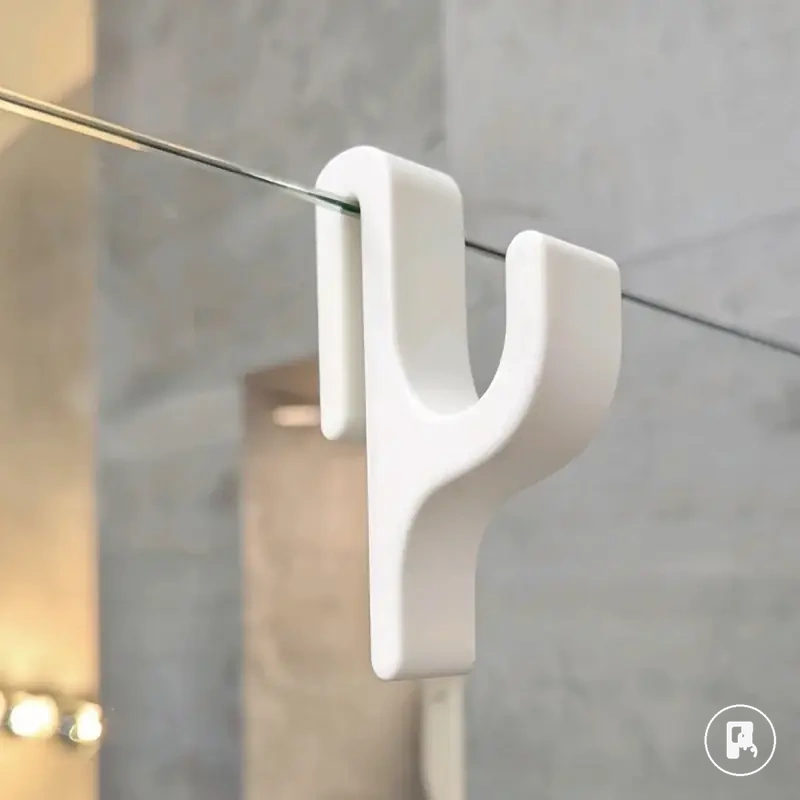
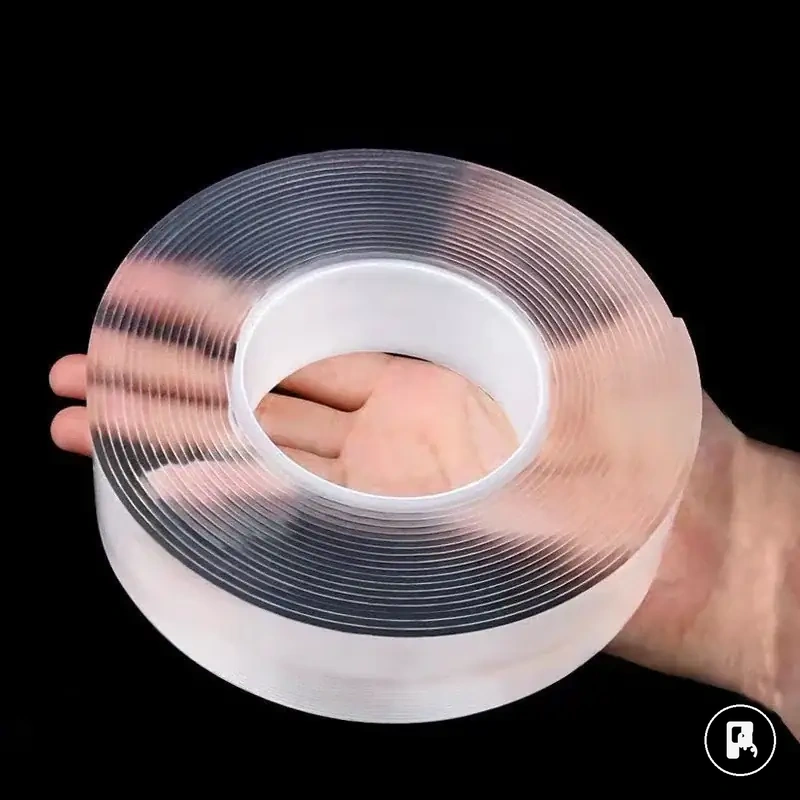
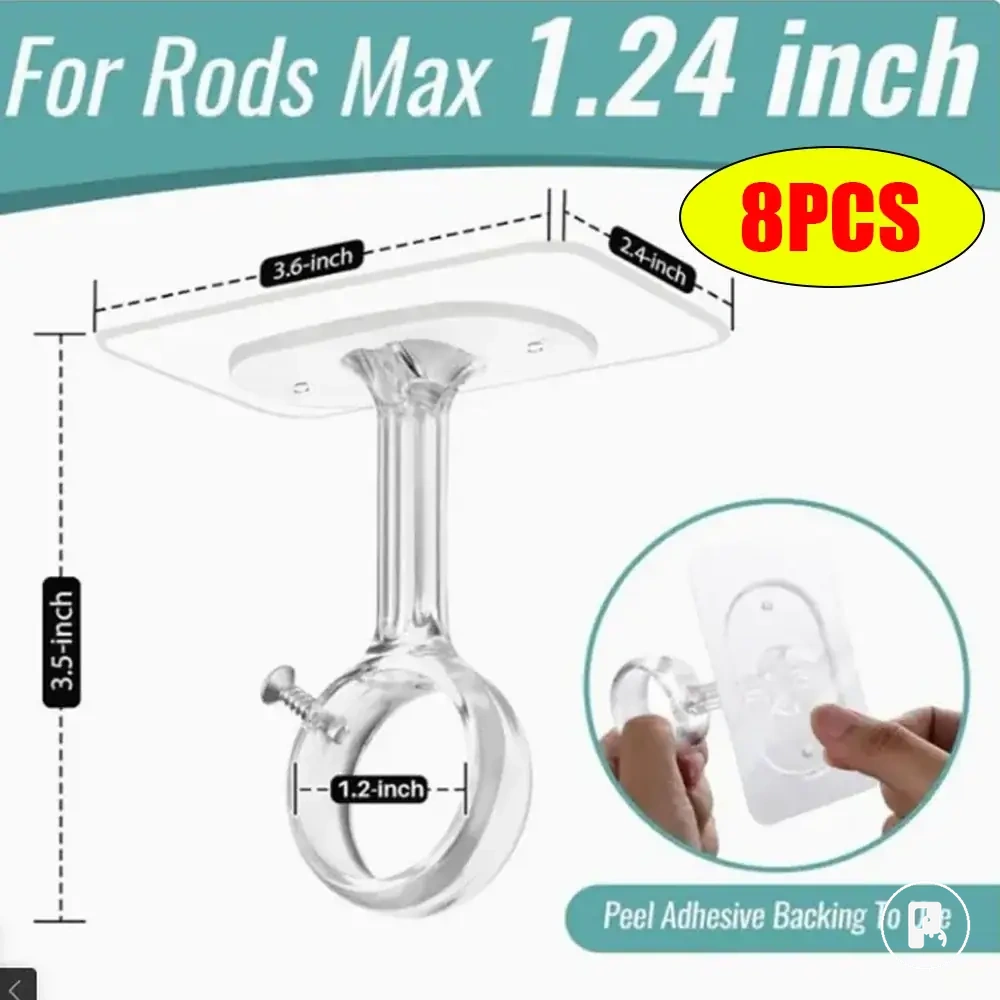
The products below are useful examples for comparing available options. Before buying, check that the compatibility criteria, key features, and product details match your needs.
This chart shows the key decision factors and safeguards for selecting no-drill accessories on borderline surfaces.
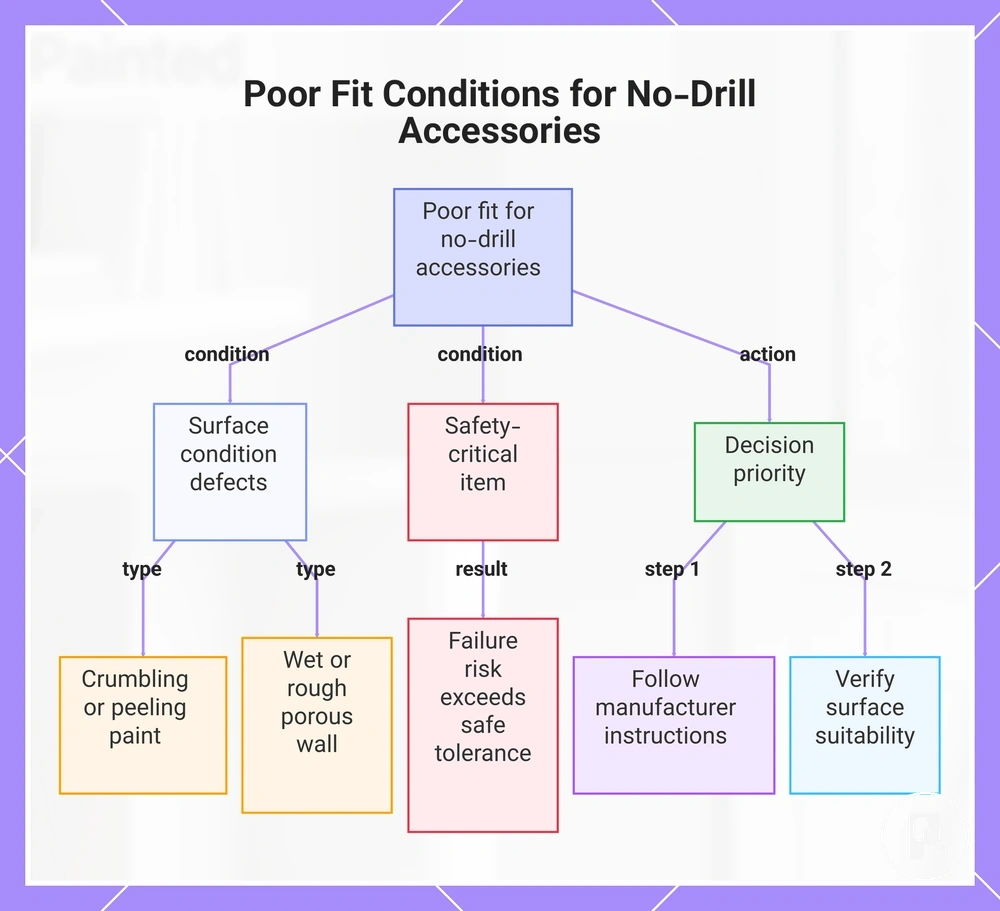
When a surface is a poor fit for no-drill accessories
A poor fit for no-drill accessories should be treated as a cautious choice or avoided when surface conditions reduce stability and increase failure risk. A crumbling surface, peeling paint, wet unstable surface, rough porous wall, or safety-critical item can all indicate reduced surface suitability depending on how the material behaves under load. In these cases, surface suitability and manufacturer instructions must take priority over appearance or convenience.
When a surface is a poor fit, specific conditions signal higher failure risk and require careful evaluation before any mounting decision. These include:
- crumbling surface — weakened structure can break away under load and increase failure risk
- peeling paint — unstable coating reduces adhesion consistency and may detach during use
- wet unstable surface — moisture exposure weakens contact stability and increases slippage risk
- rough porous wall — uneven texture and absorption reduce reliable bonding area
- safety-critical item — higher consequence of failure where load risk exceeds safe tolerance for no-drill mounting
Selection decisions must prioritize manufacturer instructions and surface suitability over visual appearance or convenience, especially in borderline or uncertain conditions. When these limits appear, the risk of failure increases and no-drill accessories may not remain dependable under real use conditions. In such cases, following manufacturer instructions and verifying surface suitability should guide the final decision.
This chart shows the surface conditions that indicate a poor fit for no-drill accessories and the decision priority to follow.