No-Drill Home Accessories Lifespan and Maintenance
No-drill home accessories lifespan refers to how long removable wall or home fixtures remain reliably attached and functional, and it depends on mounting method, surface condition, load, moisture, and maintenance habits. The category of no-drill home accessories includes adhesive, suction, tension, and clip-based systems where durability varies with use conditions.
The lifespan of these accessories is better understood by separating the accessory body from the mounting system. The accessory body may remain structurally sound for a long time, while components such as adhesive pads or suction seals often define how long the setup can stay reliably fixed to a surface. Wear patterns usually appear first in the mounting interface rather than the main structure.
Because of this separation, overall lifespan is not fixed and changes with repeated use, surface quality, and environmental exposure. In many cases, stable conditions and proper maintenance extend functional time, while heavy load or moisture exposure can reduce holding reliability earlier. The result is a condition-based lifespan where durability is shaped by how the accessory is installed and used rather than a single fixed duration.
How Long No-Drill Home Accessories Usually Last
How long no-drill home accessories usually last depends on mount type, surface condition, load, room conditions, and care habits, so the expected service life is not fixed. In most cases, durability changes based on how stable the mounting method is and how consistently the accessory is maintained during use. Moisture exposure, repeated repositioning, and uneven loading can gradually reduce holding performance over time.
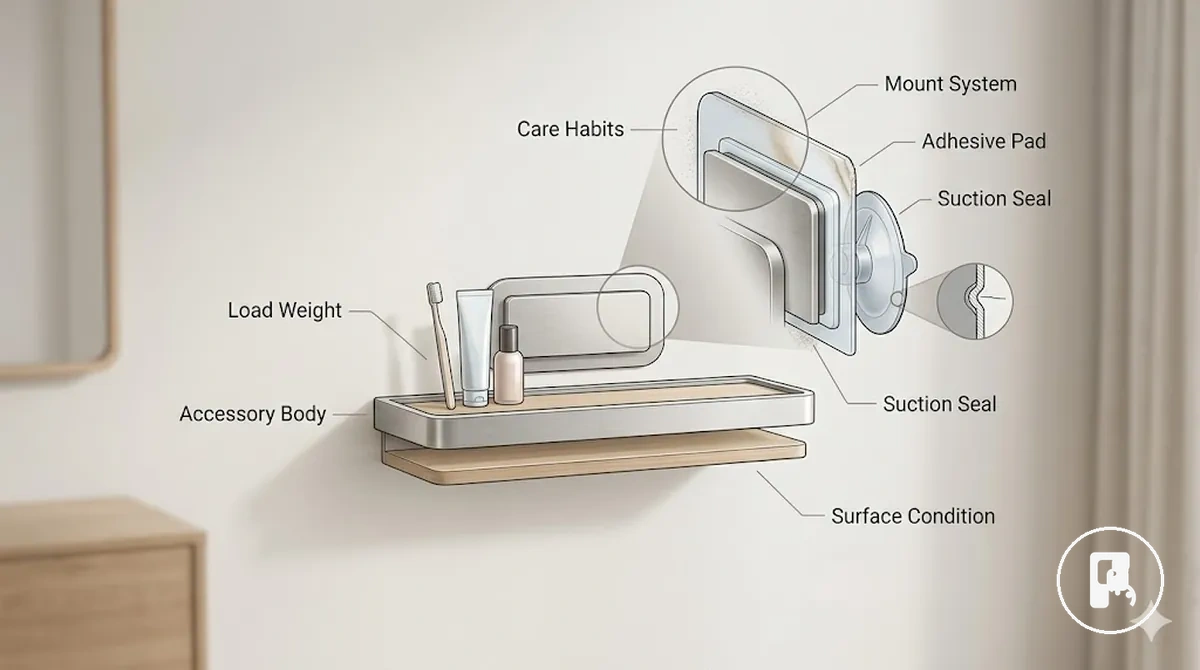
How Long No-Drill Home Accessories Usually Last depends on the visible mounting system and surface interaction, so understanding both parts is important for judging lifespan correctly. The image highlights how adhesive pads or suction points interact with the surface and influence long-term stability under real use conditions.
A key boundary in expected service life is that the accessory body may remain functional longer than the mounting part. Adhesive layers or suction seals often show earlier weakening, especially under higher load or less stable surfaces. In stable setups with proper care habits, the service period tends to remain more consistent, while weaker conditions may lead to earlier replacement of the mounting component rather than the full accessory.
Accessory Body Lifespan vs Mounting System Lifespan
Accessory body lifespan is the durability period of the main accessory structure, while mounting system lifespan refers to the durability of the adhesive pad, suction seal, tension mechanism, or clip contact that attaches it to a surface. These two lifespans differ because structural wear and surface adhesion wear follow different patterns.
This distinction clarifies which part remains usable and which part may require replacement during use. The diagram below highlights how the accessory body and mounting system behave as separate lifespan factors under real conditions.
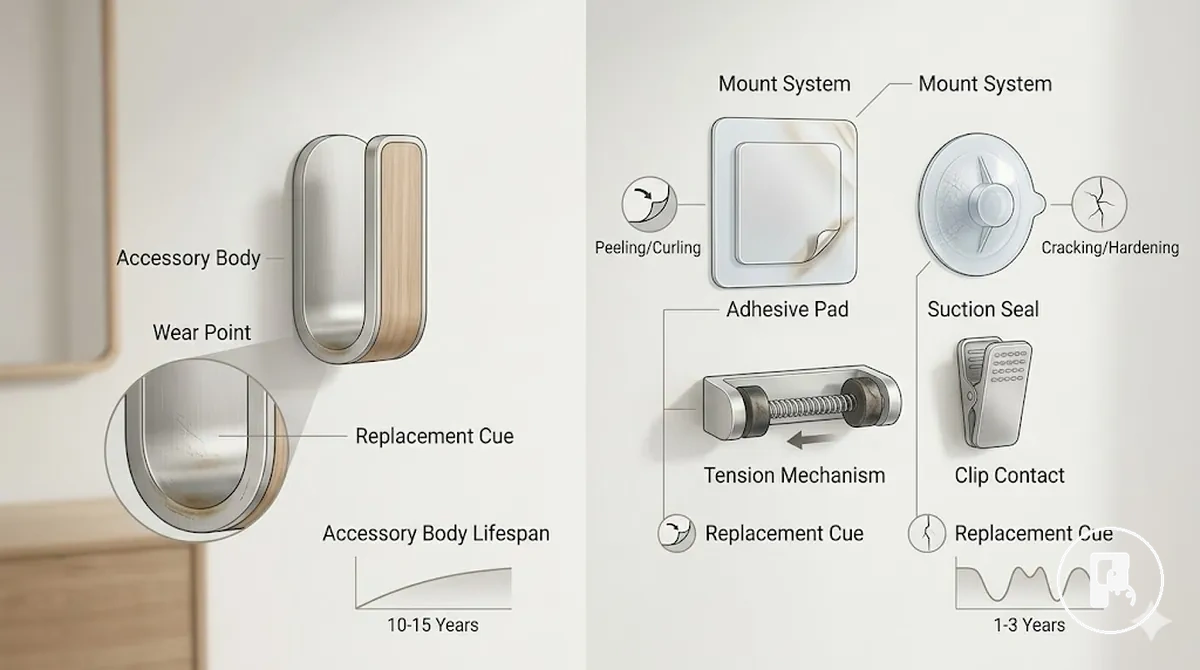
For example, a hook body may remain intact while only the adhesive pad needs replacement due to surface weakening.
Lifespan Differences by Mounting Method
Lifespan differences by mounting method refer to how adhesive, suction, tension, and clip-on systems age differently because each one has a different wear point and surface contact behavior.
Adhesive mounts typically degrade through edge lift or pad weakening, suction systems lose stability through seal loss, tension systems loosen under repeated load shifts, and clip-on systems wear at contact friction points. These differences explain why strong initial hold does not always match long-term reliability under everyday household use.
Understanding these differences helps match the mounting style to surface condition, load intensity, moisture exposure, and maintenance habits. Lifespan Differences by Mounting Method are easier to understand when each mounting style’s main wear point is visually identified.
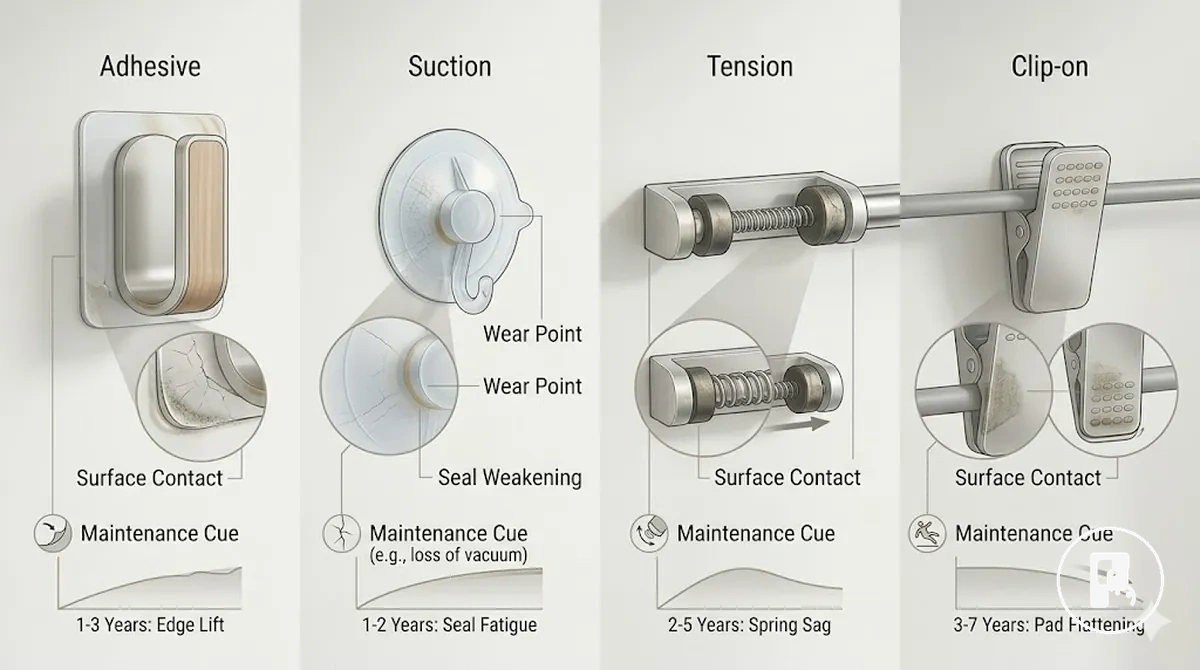
The illustration shows how adhesive, suction, tension, and clip-on systems age through different wear points rather than failing in the same way. The comparison below summarizes each mounting method, its main wear point, and the conditions that typically shorten its usable period in daily use.
| Mounting method | Main wear point | Conditions that shorten life | Maintenance cue |
|---|---|---|---|
| Adhesive | Edge lift and pad weakening | Humidity, dust, uneven surfaces | Replace when adhesion reduces |
| Suction | Seal loss | Moisture, low surface smoothness | Clean and reseat regularly |
| Tension | Gradual loosening | Vibration, changing load | Re-tighten mechanism periodically |
| Clip-on | Contact friction wear | Frequent removal and reattachment | Check grip stability |
Adhesive Mounts and Replacement Pads
An adhesive mount is a no-drill mounting system that relies on an adhesive pad to hold the accessory body against a surface, and its reliability depends mainly on the condition of that pad rather than the accessory itself. The replacement pad becomes the weak point when edge lifting appears, residue builds up, or load stress combined with humidity starts reducing surface contact strength.
The accessory body may still remain usable even when the adhesive pad is no longer stable, which is why replacement often targets only the pad instead of the full fixture. For example, a wall hook can stay structurally intact, but its adhesive pad may need replacement once it begins slipping under normal load. :contentReference[oaicite:0]{index=0}
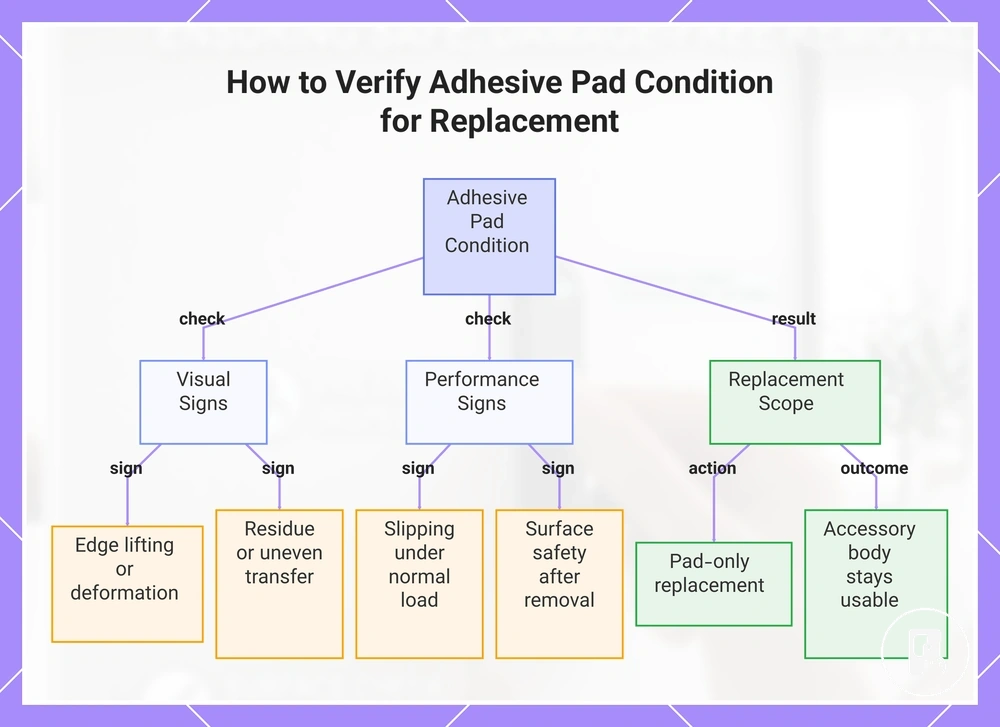
The checklist below verifies adhesive pad condition before deciding replacement:
- Edge lifting along the pad corners or edges
- Visible residue or uneven surface transfer
- Slipping or gradual downward movement under load
- Pad deformation or loss of flat contact
- Surface safety concerns after repeated removal or repositioning
This chart shows the main signs to check on an adhesive pad and what the replacement decision typically involves.
Suction Mounts and Seal Wear
Suction mounts rely on a suction cup seal that holds through surface contact, and suction mount reliability decreases when seal wear affects the rim, air tightness, or contact stability. Seal performance typically weakens due to changes in surface smoothness, moisture film interference, temperature shifts, or repeated removal that disturbs reseating consistency.

Suction seal checks clarify how rim condition and surface contact interact to maintain or reduce holding stability over time. These checks focus on identifying early seal wear rather than assuming immediate failure of the suction accessory.
The diagnostic checklist below highlights common seal wear indicators before reliability drops further:
- Rim shape distortion or uneven suction edge
- Air gaps forming between cup and surface
- Gradual sliding or downward movement
- Moisture film trapped under the suction cup
- Need for frequent reseating on smooth surfaces
Tension and Clip-On Mounts Under Repeated Use
Tension and clip-on mounts under repeated use refer to no-drill systems that rely on pressure fit or mechanical grip, and they age mainly through pressure loss, contact wear, and gradual loosening rather than adhesive failure. Their durability depends on how consistently tension, clip grip, and edge contact maintain stability during repeated movement and load shifts.
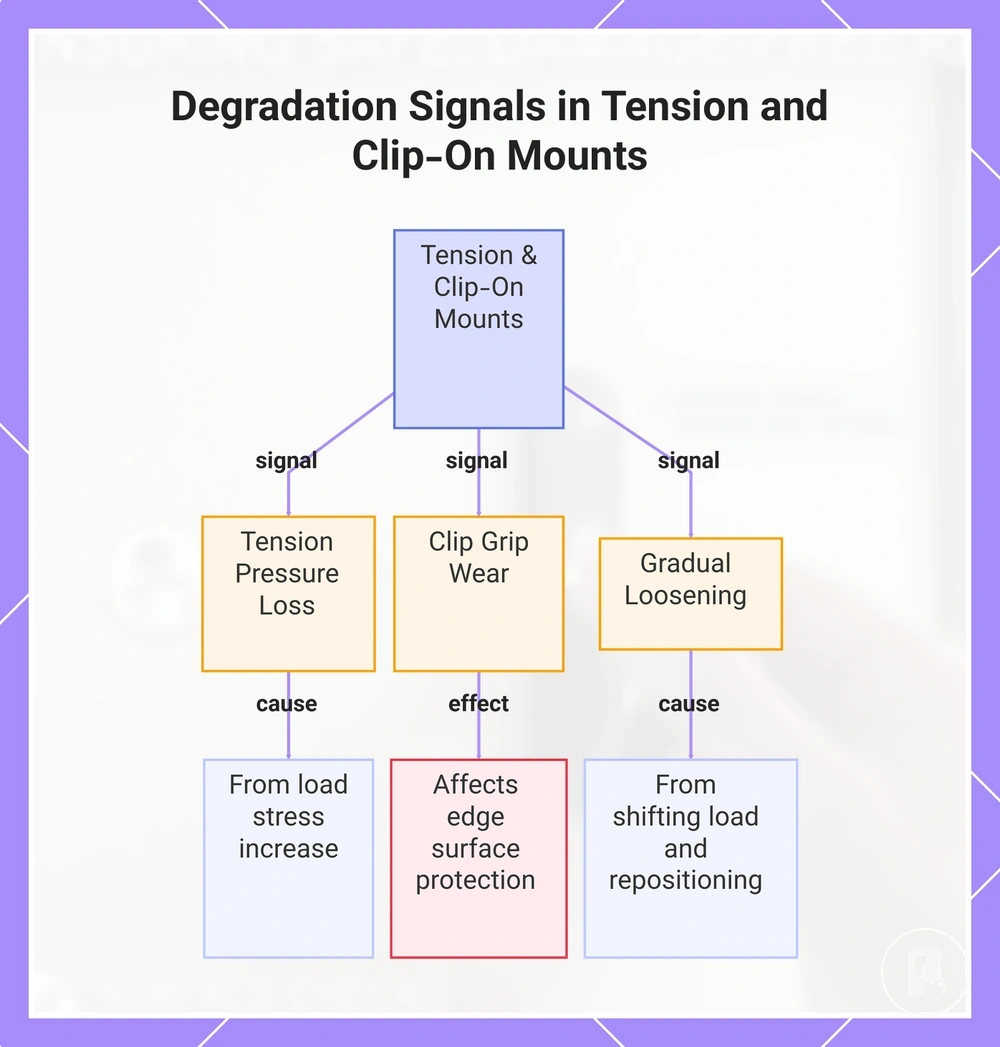
Repeated use changes contact stability through three main signals:
- Tension pressure loss in pressure-fit mounts as load stress increases loosening over time
- Clip grip wear at edge contact points where repeated movement affects surface protection
- Gradual loosening caused by shifting load and repeated repositioning cycles
These mounts may offer more reuse potential than adhesive systems, but their performance still depends on fit accuracy, edge contact quality, and how much repeated use stress is applied over time.
This chart shows the three main degradation signals that affect tension and clip-on mounts under repeated use.
Conditions That Shorten or Extend No-Drill Accessory Life
Conditions That Shorten or Extend No-Drill Accessory Life depend on how surface, weight, moisture, heat, cleaning residue, daily movement, and mount type interact during use. Durability is conditional rather than fixed, because each factor changes contact stability and load behavior in different ways.
These conditions can be evaluated through an EAV structure that links each factor to the attribute it affects and the resulting durability outcome.
| Condition | Attribute affected | Value or risk state | Lifespan effect |
|---|---|---|---|
| Surface | Contact stability | Smooth vs uneven surface quality | Affects grip consistency and hold reliability |
| Weight | Load pressure | Light vs heavy applied load | Higher load increases stress and failure risk |
| Moisture | Bond or seal behavior | Dry vs humid exposure | Can weaken adhesion or suction stability |
| Heat | Material stability | Stable vs fluctuating temperature | May reduce structural consistency over time |
| Cleaning residue | Surface bonding quality | Clean vs residue buildup | Residue lowers effective contact strength |
| Daily movement | Use stress cycles | Static vs repeated motion | Increases loosening and wear rate |
Durability changes should be read as condition-based signals rather than fixed outcomes. Normal wear is expected under stable use conditions, while early failure often indicates avoidable stress such as poor surface preparation, excess load, or residue buildup affecting contact quality.
Surface Condition, Weight, and Daily-Use Stress
Surface condition, weight, and daily-use stress determine how an existing no-drill mount performs, and durability changes based on how these factors interact rather than a fixed quality level. Smoothness, cleanliness, paint stability, and dust or oil on the surface affect contact quality, while weight margin and repeated pulling increase use pressure that can gradually weaken stability.
Before judging a mount as low quality, these conditions should be verified because they often explain early wear signals without indicating a structural defect:
- Surface smoothness and whether dust or oil reduces contact stability
- Paint stability or coating condition affecting grip consistency
- Static load versus swinging or moving load that increases stress
- Weight margin compared to how often the item is handled or pulled
- Repeated pulling or daily handling that accelerates loosening over time
A light static object such as a decorative item can last longer than a frequently pulled object on the same mount, because daily-use stress creates more disruption at the contact point than weight alone. This shows that surface condition and movement behavior often influence durability more than load expectation.
Moisture, Heat, and Wet-Area Exposure
Moisture, heat, and wet-area exposure determine how no-drill mounts behave in bathrooms and similar damp environments, and compatibility depends on exposure pattern and mounting type rather than a fixed waterproof condition. Adhesive bonds may weaken under repeated steam and cleaning chemical exposure, while suction seals can lose stability when condensation and temperature shifts interrupt surface contact.
Wet-area performance changes across bathroom tiles, shower zones, and condensation-heavy spaces where steam, water spray, and heat cycles occur repeatedly. These conditions affect adhesive bond strength, suction seal consistency, and surface material stability in different ways depending on how often exposure happens.
| Wet-area condition | Mount affected | Likely effect | Care cue |
|---|---|---|---|
| Steam buildup | Suction seal | Reduced seal stability due to moisture interruption | Allow full drying before reuse |
| Water splash exposure | Adhesive bond | Gradual reduction in bonding strength | Minimize repeated direct contact |
| Heat fluctuation | All mount types | Material expansion affecting grip consistency | Avoid proximity to heat sources |
| Cleaning chemicals | Surface contact layer | Surface weakening or residue interference | Use mild cleaning agents near contact zones |
Waterproof or water-resistant labeling reflects design intent, but it does not guarantee permanent hold under all wet-area exposure conditions. For handling practices in such environments, see wet-area no-drill accessory care.
How Holding Strength Changes Over Time
Holding strength in no-drill accessories changes over time as the initial hold gradually transitions into reduced holding strength due to material behavior, surface contact shifts, and usage conditions such as adhesive creep, suction seal loss, load margin variation, and repeated surface movement.
This transition explains holding strength over time as a process where grip stability evolves under stress rather than remaining fixed. Adhesive creep can slowly reduce contact grip, suction seal loss can weaken airtight stability, and load margin changes can increase stress concentration on specific contact points depending on usage patterns.
These changes can appear gradually or suddenly depending on conditions. Gradual weakening often shows slow slipping, edge lift, or reduced grip stability, while sudden failure can occur when load distribution exceeds remaining contact capacity, which makes periodic checks important for safer usage awareness.
The signals below organize common early indicators of reduced holding strength and their meaning in terms of underlying conditions.
| Signal | Likely attribute issue | Check | What it means |
|---|---|---|---|
| Slow slipping | Adhesive creep | Surface cleanliness and edge contact | Gradual reduction in grip stability |
| Sudden drop | Load margin exceeded | Weight distribution and mounting point | Immediate loss of holding balance |
| Edge lift | Adhesive bond weakening | Perimeter contact condition | Loss of full surface adhesion |
| Loose rotation | Surface movement stress | Repeated pulling or handling points | Progressive instability under use |
| Seal noise or air shift | Suction seal loss | Rim contact and airtight condition | Reduced vacuum-based stability |
Maintenance That Helps No-Drill Accessories Last Longer
Maintenance for no-drill accessories is the set of routine care actions that helps preserve contact quality, dryness, and load stability over time by keeping the mounting surface and contact points in consistent condition. These maintenance habits reduce unnecessary stress on adhesive, suction, or tension-based systems by limiting buildup, moisture impact, and uneven load behavior.
Maintenance habits vary by condition, because different environments affect holding stability in different ways. Cleaning and residue control help maintain surface contact for adhesive mounts, while proper drying supports suction seal performance in damp zones. Regular load checks and edge checks help identify uneven stress, and gentle handling reduces repeated movement that can weaken grip consistency over time.
Maintenance effectiveness depends on how frequently the accessory is used and the environment it is placed in. High-use items or wet-area installations typically require more frequent inspection because exposure to moisture, steam, or repeated loading can accelerate changes in contact behavior and stability.
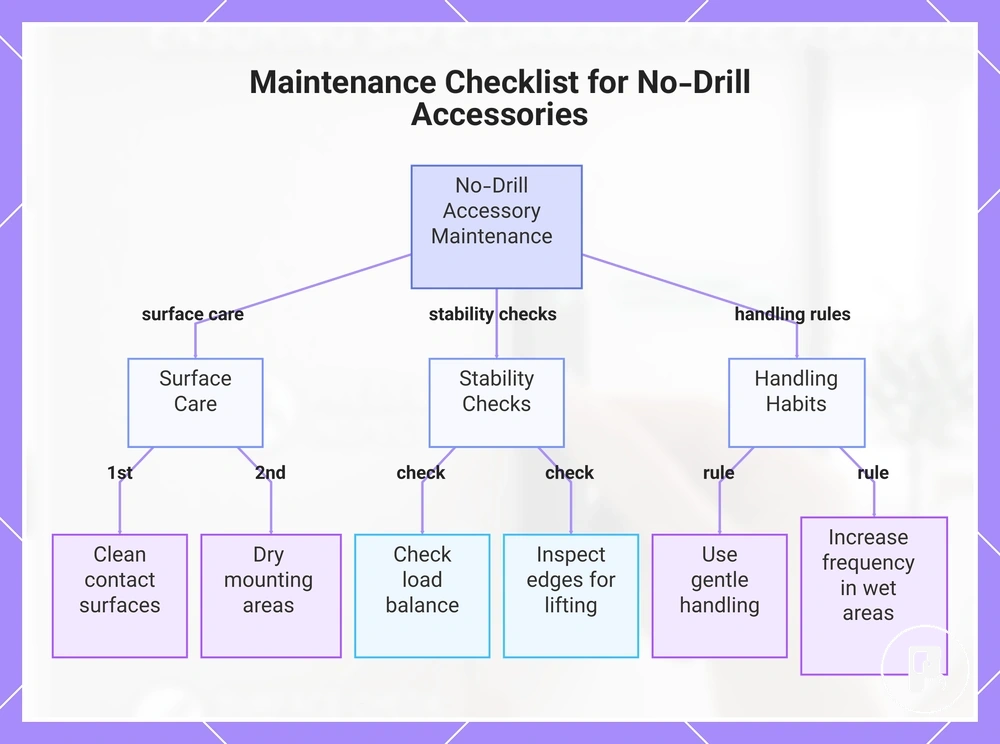
Maintenance checklist focused on preserving durability and reducing early wear signals:
- Clean contact surfaces to remove dust and residue, which helps maintain stable adhesion and grip quality.
- Dry mounting areas after exposure to moisture to support suction seal stability and reduce slipping risk.
- Check load balance to ensure weight is evenly distributed, which supports consistent holding strength over time.
- Inspect edges for early lifting or separation, which often indicates reduced contact efficiency.
- Reseat suction or adhesive mounts when alignment shifts, which can help restore contact uniformity.
- Use gentle handling during daily use to reduce repeated stress on mounting points.
- Increase inspection frequency in wet or high-use areas to manage faster condition changes.
This chart shows the key routine care actions to preserve the durability and stability of no-drill accessories based on cleaning, structural checks, and handling habits.
Cleaning, Drying, and Residue Control
Cleaning, drying, and residue control helps preserve adhesive contact and suction stability by keeping the mounting surface free from dust, oil, soap residue, and moisture that can interfere with surface interaction. Stable performance depends on how consistently cleaning, drying, and residue removal maintain surface sensitivity and contact clarity over time.
Clean mounting conditions help maintain adhesive contact stability and suction stability by reducing dust-oil buildup, controlling soap residue interference, and ensuring proper drying time before reuse. These factors matter because even small changes in surface condition can affect grip consistency depending on the material and environment.
- Dust accumulation can reduce adhesive contact quality and weaken grip consistency over time.
- Oil or grease can disrupt bonding behavior and reduce stable surface interaction.
- Soap residue may create a thin film that interferes with suction stability on smooth surfaces.
- Drying time affects whether moisture remains on the surface and weakens contact performance.
- Surface sensitivity determines how strongly cleaning and residue control influence stability outcomes.
In some cases, over-cleaning or leaving chemical or soap residue behind can reduce performance instead of improving it. For example, residue film from improper rinsing may weaken suction stability or reduce adhesive contact effectiveness on sensitive surfaces.
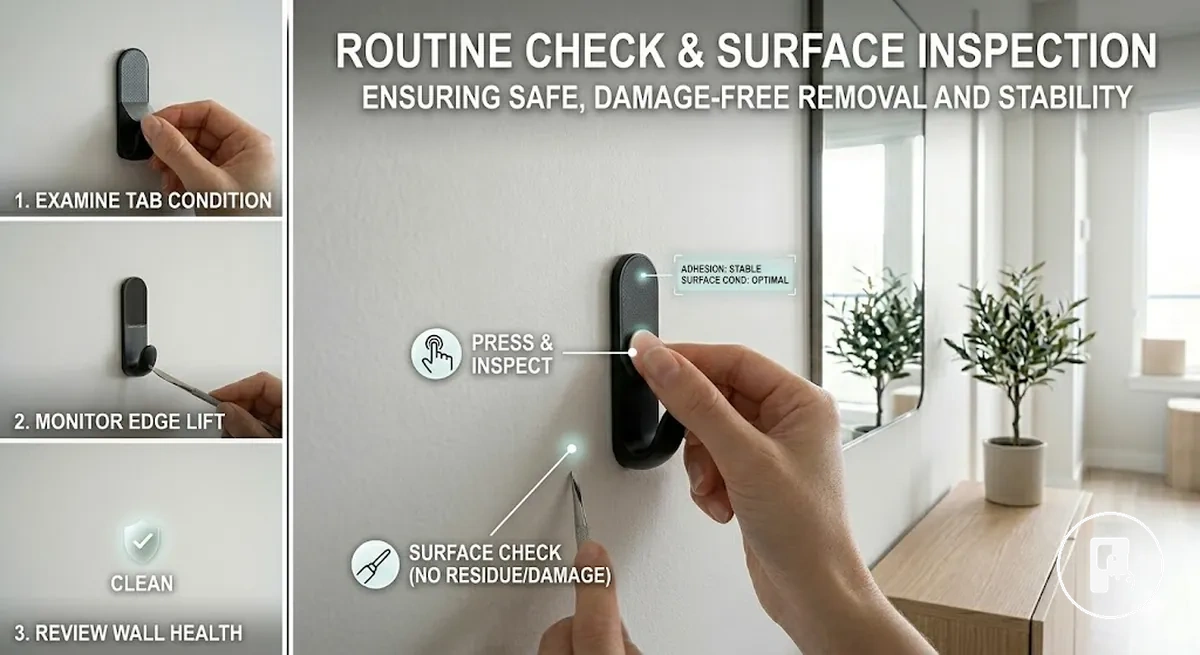
Seal Checks and Adhesive Edge Checks
Seal checks and adhesive edge checks are inspection habits used to detect early weakening in suction seals and adhesive edges before the accessory becomes loose or unsafe. These seal checks help identify early indicators such as lifted edges, bubbling, sliding, air gaps, or recurring movement that suggest reduced contact stability under normal load conditions.
Early inspection helps separate minor instability from progressing failure. Lifted edges or small air gaps may sometimes be resolved through reseating when they occur once under light use, while recurring movement, expanding air gaps, or repeated sliding across the same surface may indicate deeper loss of adhesion or seal integrity that can require action based on fix no-drill accessories that loosen.
Diagnostic checklist for seal checks and adhesive edge checks:
- Lifted edges: visible separation at adhesive margins indicating reduced edge contact stability.
- Bubbling: trapped air under adhesive layer suggesting uneven surface contact.
- Sliding: gradual movement of the accessory under normal load conditions.
- Air gaps: visible spaces under suction rim reducing sealing consistency.
- Recurring movement: repeated shifting after reseating indicating persistent instability.
When to Replace No-Drill Mounting Parts
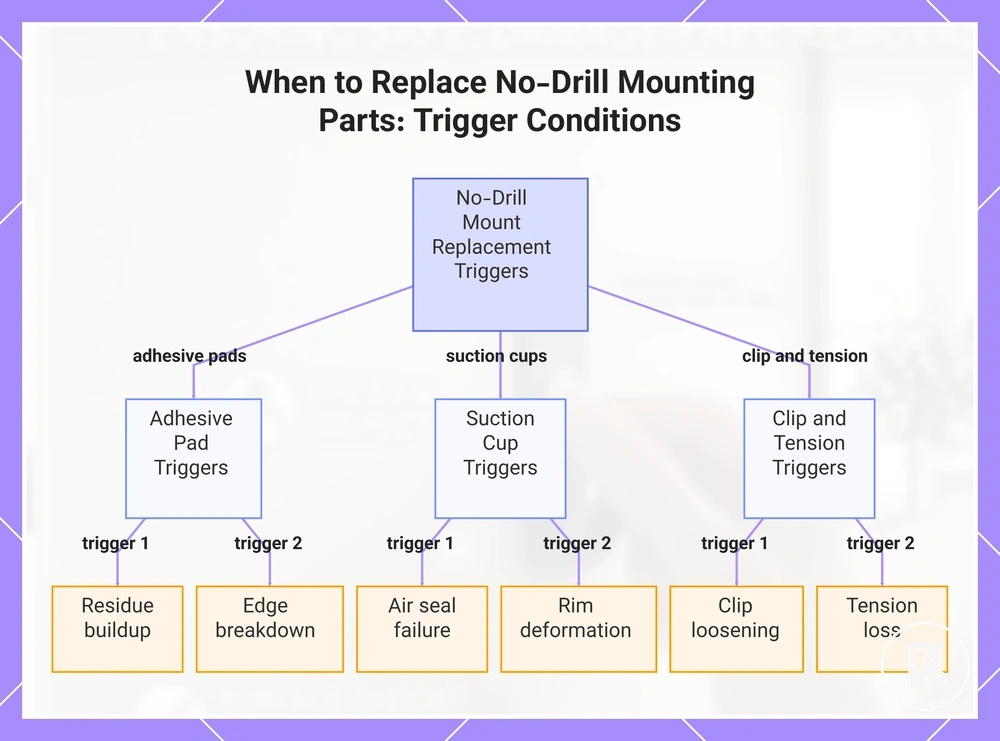
Replacement of no-drill mounting parts depends on visible wear, repeated loosening, and overall risk level during use. When adhesive pads, suction cups, clips, or tension mechanisms show reduced holding stability under normal conditions, replacement is usually considered instead of continued maintenance.
Part-specific triggers vary by mounting system and failure type. Adhesive pads may need replacement when residue buildup, edge breakdown, deformation, or reduced surface contact occurs. Suction cups can require replacement when air sealing weakens, air gaps appear, or rim structure deforms. Clips and tension mechanisms may require replacement when visible wear, repeated loosening, reduced hold strength, or mechanical deformation affects stable grip performance.
Replacement decisions should distinguish between worn mounting parts and the main accessory body. In many cases, the mounting component is replaced first while the accessory body remains structurally sound, especially when failure is isolated to contact surfaces or holding mechanisms rather than the full structure.
Decision checklist for replacement timing:
- Adhesive pad: visible wear, residue impact, or edge breakdown causing reduced surface grip → replace mounting pad
- Suction cup: air leakage, air gaps, or rim deformation causing unstable hold → replace suction component
- Clip mechanism: repeated loosening or weak grip under normal load → replace clip part
- Tension system: loss of tension or uneven pressure distribution → replace mechanism
- Surface residue impact: persistent contamination affecting adhesion even after cleaning → consider replacement
- Repeated failure: instability returns quickly after reseating → replace affected mounting part
- Body condition check: accessory body stable but mount fails → replace only mounting component
This chart shows the specific wear and failure conditions that indicate replacement of no-drill mounting parts, organized by part type.
Replacement Adhesive Pads and Reusable Sticky Pads
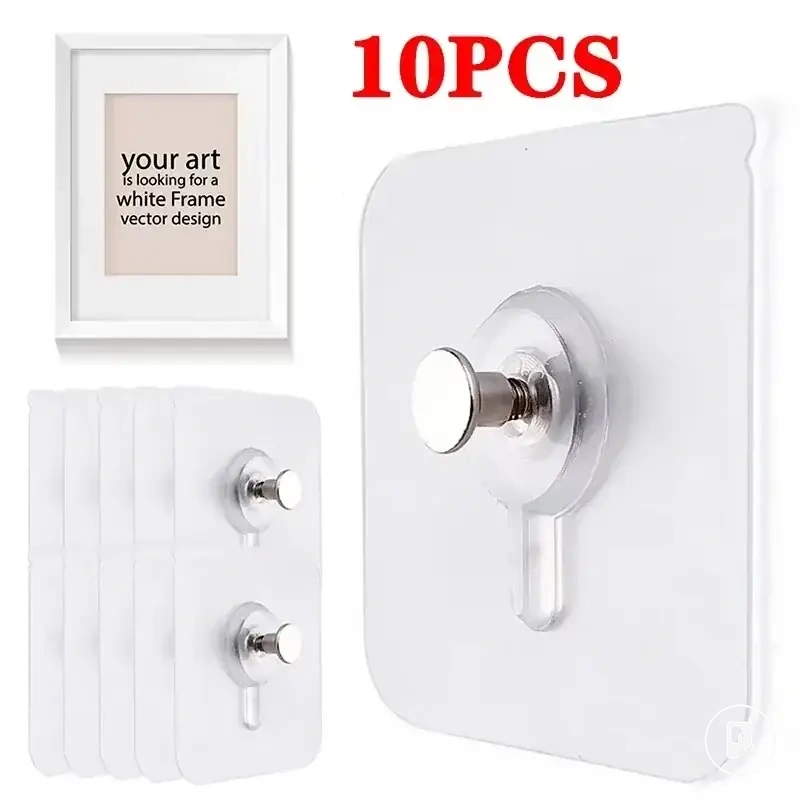
Replacement adhesive pads and reusable sticky pads depend on surface type, load level, residue conditions, and compatibility with the mounting system, and they are appropriate when the existing pad can no longer maintain stable contact under normal use. Selection is based on whether the pad can still provide consistent adhesion without introducing instability or surface risk.
Pad behavior changes with surface and usage conditions, so pad size, adhesive type, surface safety, weight rating, water exposure, residue risk, and reuse limits all influence whether a replacement adhesive pad or reusable sticky pad is suitable for continued use in a specific setup.
A stronger adhesive pad is not always safer, especially on painted or delicate surfaces where higher bonding strength may increase removal risk or leave residue. In such cases, compatibility with the surface matters more than maximum holding strength.
Criteria for selecting replacement adhesive pads and reusable sticky pads:
- Pad size should match the mounting area to maintain even surface contact and reduce edge stress.
- Adhesive type must align with surface safety needs to avoid damage or excessive residue.
- Surface condition should allow stable bonding without dust, oil, or moisture interference.
- Weight rating must align with the applied load to prevent early loosening or failure.
- Moisture exposure level should be considered in humid or wet environments where adhesion may vary.
- Residue risk should remain low to avoid long-term surface damage after removal.
- Reuse limits should be checked to ensure consistent performance across multiple applications.
Worn Suction Cups and Loose Mounting Mechanisms
Worn suction cups and loose mounting mechanisms indicate reduced reliability when the accessory body is still usable, meaning the failure is concentrated in the contact or locking parts rather than the full structure. In these cases, suction wear or loose hardware typically shows reduced stability under normal load instead of immediate full detachment.
Wear is identified through changes in the suction rim shape, reduced flexibility, small cracks, trapped air under the cup, weakened locking lever movement, clip looseness, and repeated reseating that does not restore stable hold. When these signals appear together, the worn mount is no longer maintaining consistent contact, even if the accessory body remains intact. In one scenario, if suction releases shortly after reseating on a smooth, clean surface, replacement becomes safer than continued adjustment attempts.
Diagnostic checklist for worn suction cups and loose mounting mechanisms:
- Suction rim shape deformation reducing full surface contact
- Loss of flexibility in the suction cup affecting sealing response
- Cracks in suction material weakening hold integrity
- Trapped air under cup creating unstable pressure balance
- Loose locking lever reducing applied mounting force
- Clip looseness causing unstable mechanical grip
- Repeated reseating with no improvement in hold stability
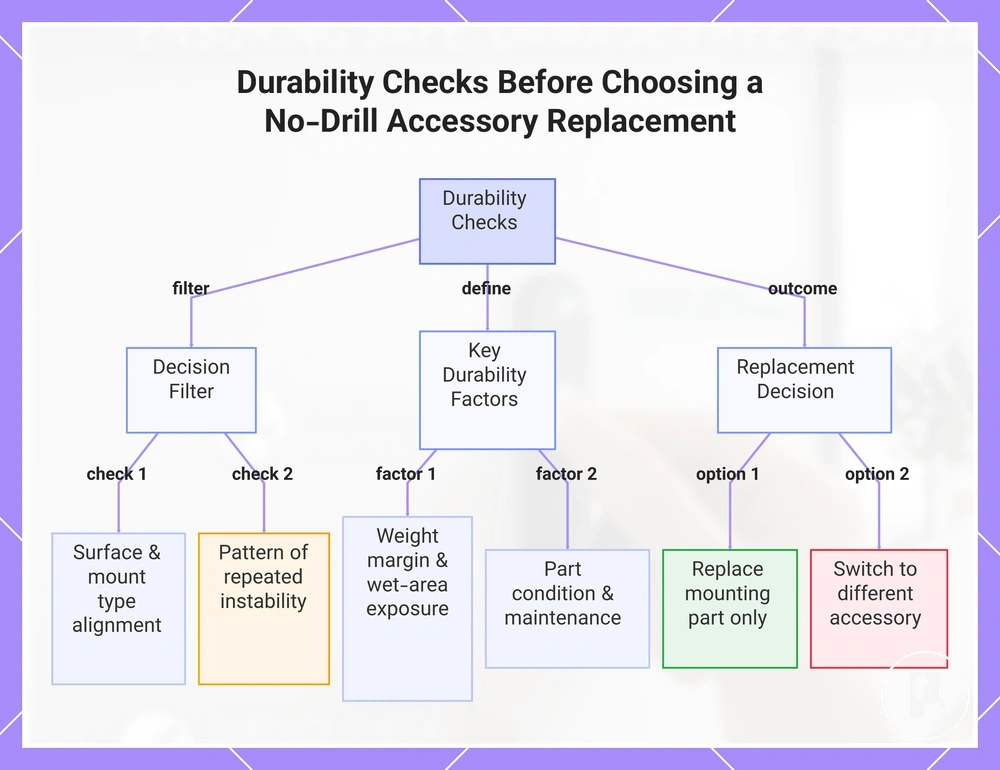
Durability Checks Before Choosing a Replacement
Durability checks before choosing a replacement no-drill accessory depend on how mount type, surface match, wet-area exposure, and weight margin interact under real use conditions. These durability checks help determine whether only a mounting part is failing or whether the overall accessory type no longer fits the environment and load conditions.
Performance issues often appear when one or more conditions drift out of alignment. A suction-based mount may lose stability on humid or steam-exposed surfaces, adhesive systems may weaken on residue-heavy tiles, and clip or tension systems may loosen under repeated movement. These patterns help identify whether the problem is localized to a replaceable mounting part or indicates a broader mismatch with the current setup.
Surface match and mount type work together as the main decision filter. When repeated instability occurs on otherwise suitable surfaces, replacing only the mounting part may be enough. However, when the surface conditions and usage environment consistently exceed the design limits of the mount type, switching to a more suitable no-drill accessory becomes a more reliable direction.
Weight margin, wet-area exposure, replaceable pads, suction quality, material condition, and maintenance needs define the final selection outcome. When multiple durability checks show stress at the same time, the issue may extend beyond a single component, making full replacement or a different mounting approach more appropriate than repeated partial fixes.
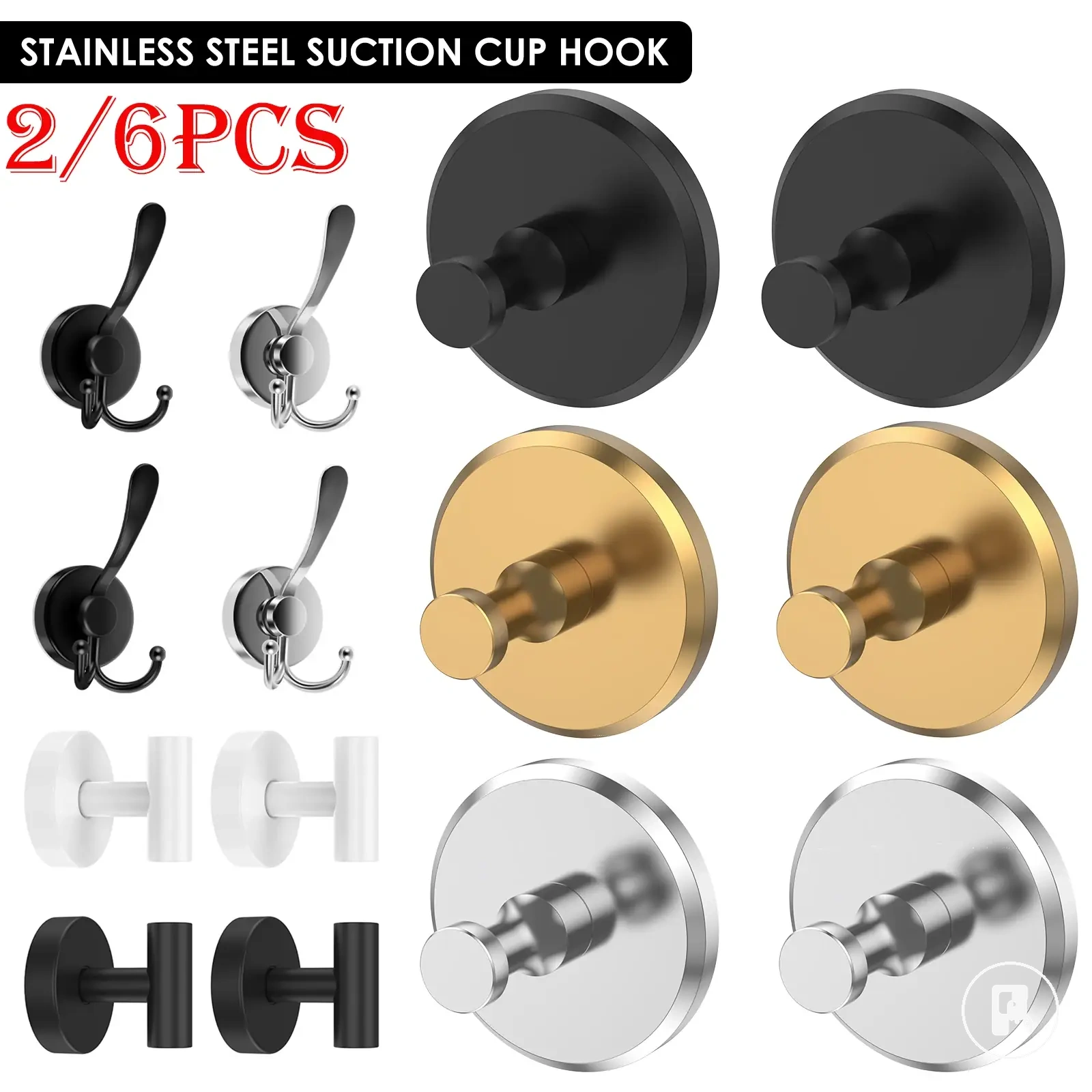
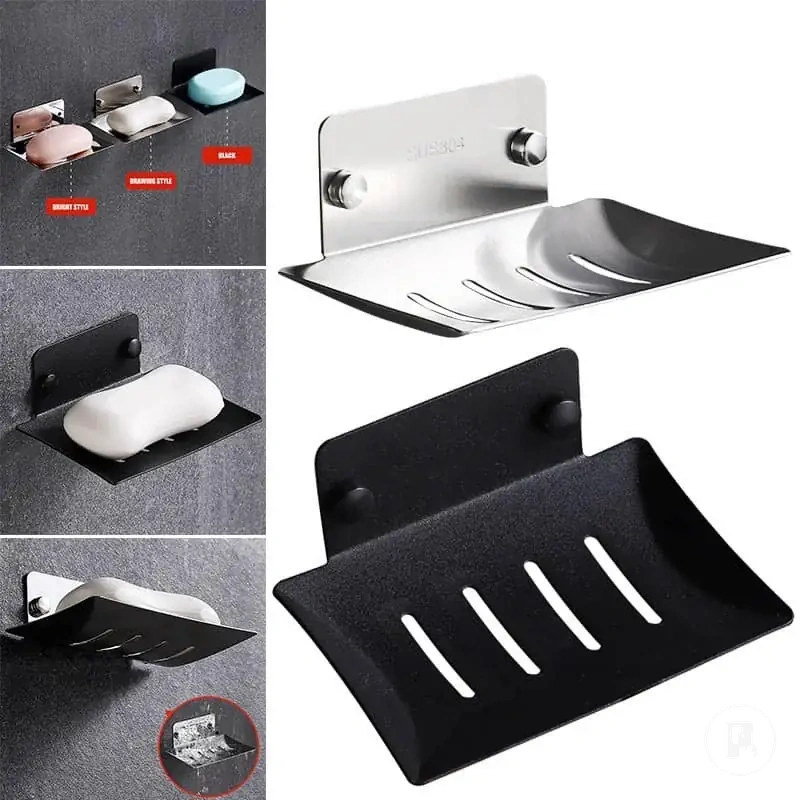
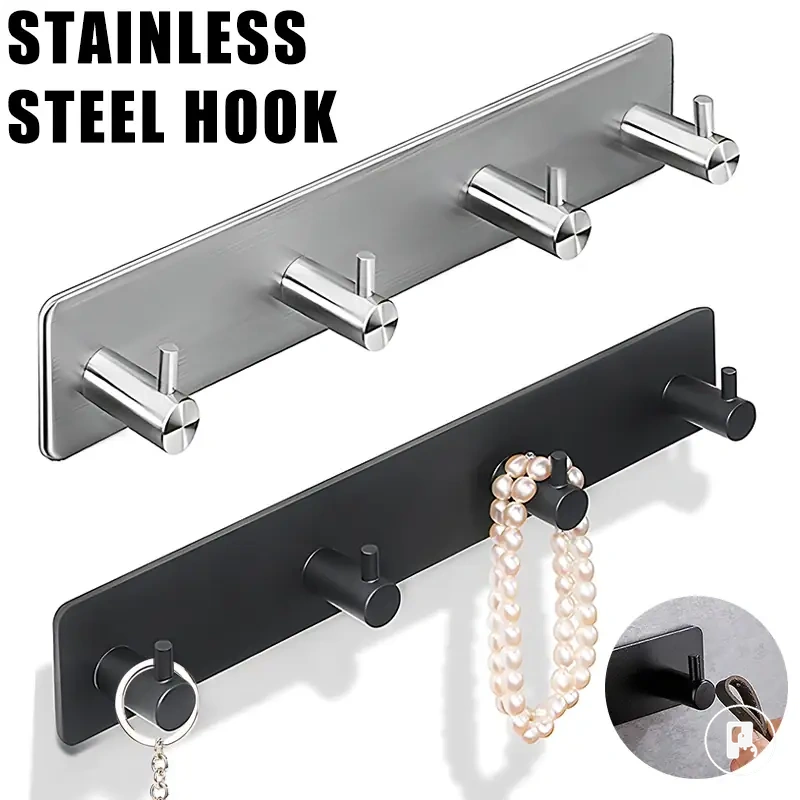
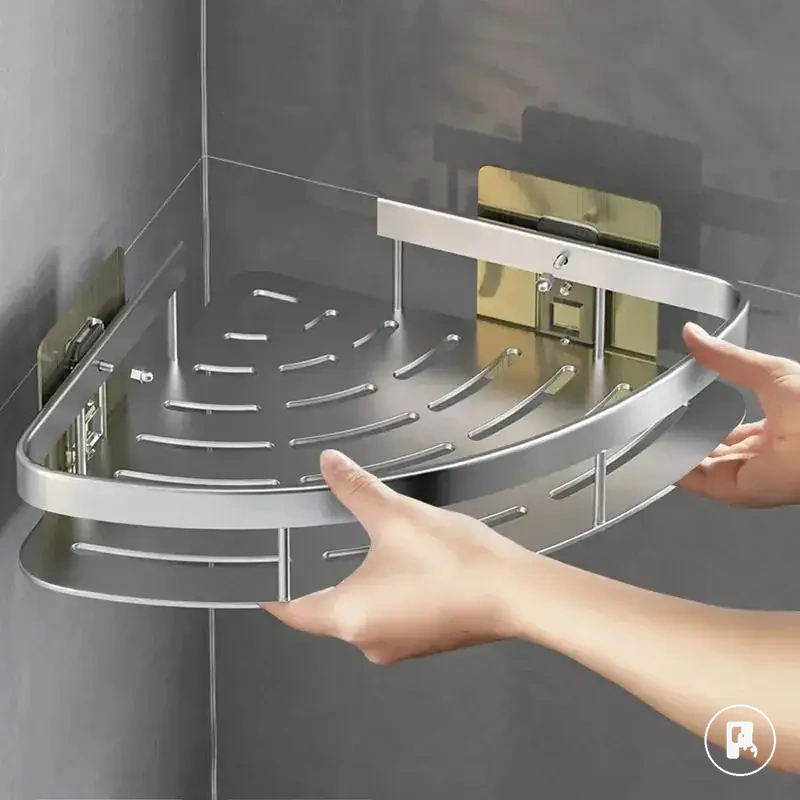
Here are product examples that may make comparison easier. Before buying, always review the compatibility criteria, essential features, and product details.
This chart shows the key durability checks and decision logic for choosing between partial replacement and switching to a different no-drill accessory.